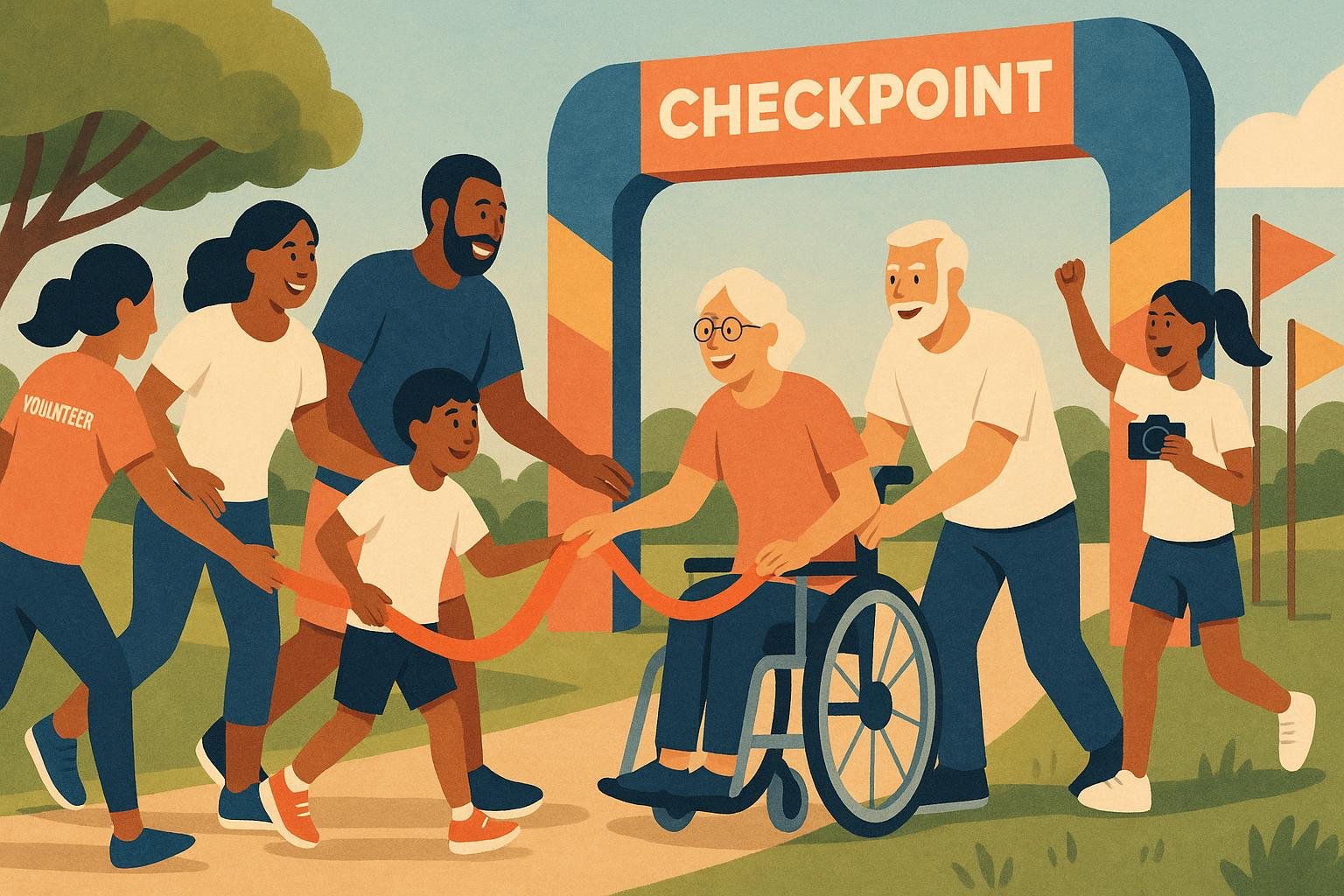
This ready-to-customise blueprint helps HR, internal comms and events teams design an inclusive Amazing Race corporate Family Day that prioritises participation over pure competition. Use the checklist, editable tasks, scoring options and run-day timeline to reduce onboarding friction and include remote families.
Design your Amazing Race-style Family Day for participation first: mixed-difficulty missions, clear onboarding and optional competitive tracks. Set three objectives up front: safety, inclusion and memorable experiences. Storytelling at checkpoints increases engagement and helps families of all ages join in.
Offer easy and tougher variants so teams can self-select. For hands-on stations include single-use materials where appropriate, gloves and hand sanitiser. Remote teams can mirror missions through photo or short video submissions judged alongside in-person entries.
Recommended: points-based scoring with category awards. Points reward mission completion and creativity; category awards recognise teamwork, best family photo and CSR impact. Avoid using fastest-time as the sole measure, time penalties can unintentionally exclude slower or mobility-limited teams.
Sample scoring table (paste into a spreadsheet):
Team | Task points | Bonus points | Time penalty | Total Alpha | 48 | 5 | 0 | 53 Bravo | 44 | 10 | 2 | 52
Automate scoring where possible and use a live leaderboard sparingly to keep focus on participation.
Sample half-day timeline: 09:00 registration, 09:30 orientation, 10:00 staggered starts, 12:00 lunch, 13:00 final missions, 14:00 awards. Key roles: event lead, volunteer station leads, accessibility liaison, first-aid and tech support.
For hybrid design create parallel missions that remote families can complete at home and submit digitally. Provide captions or transcripts for streamed orientation, a remote judge for submissions and keyboard-accessible entry forms. Minimise barriers to entry so participants focus on fun, not technology.
Reward ideas: family experience vouchers, CSR gifts, inclusive category trophies and small participation prizes. After the event run a short survey asking about inclusion, favourite mission and any accessibility issues. Measure participation by who joined and engaged during the event rather than by registration alone; use insights to adapt future formats and improve accessibility.
Mix cognitive, creative, social and low-impact movement tasks. Offer easy and tougher variants so children, caregivers and older adults can contribute meaningfully.
Collect needs at registration, assign an accessibility liaison, flag stations requiring adjustments and brief volunteers on confidential handling and accommodation processes.
Use a points system for mission completion plus category awards for creativity and teamwork. Avoid making fastest time the only success metric.
Mirror missions with photo/video submissions, assign remote judges, provide captions/transcripts and ensure entry forms are keyboard-accessible.
Ready to run an inclusive Amazing Race corporate Family Day with hybrid participation?
42Race offers Virtual participation and Fundraising campaign support. https://www.42race.com/solutions
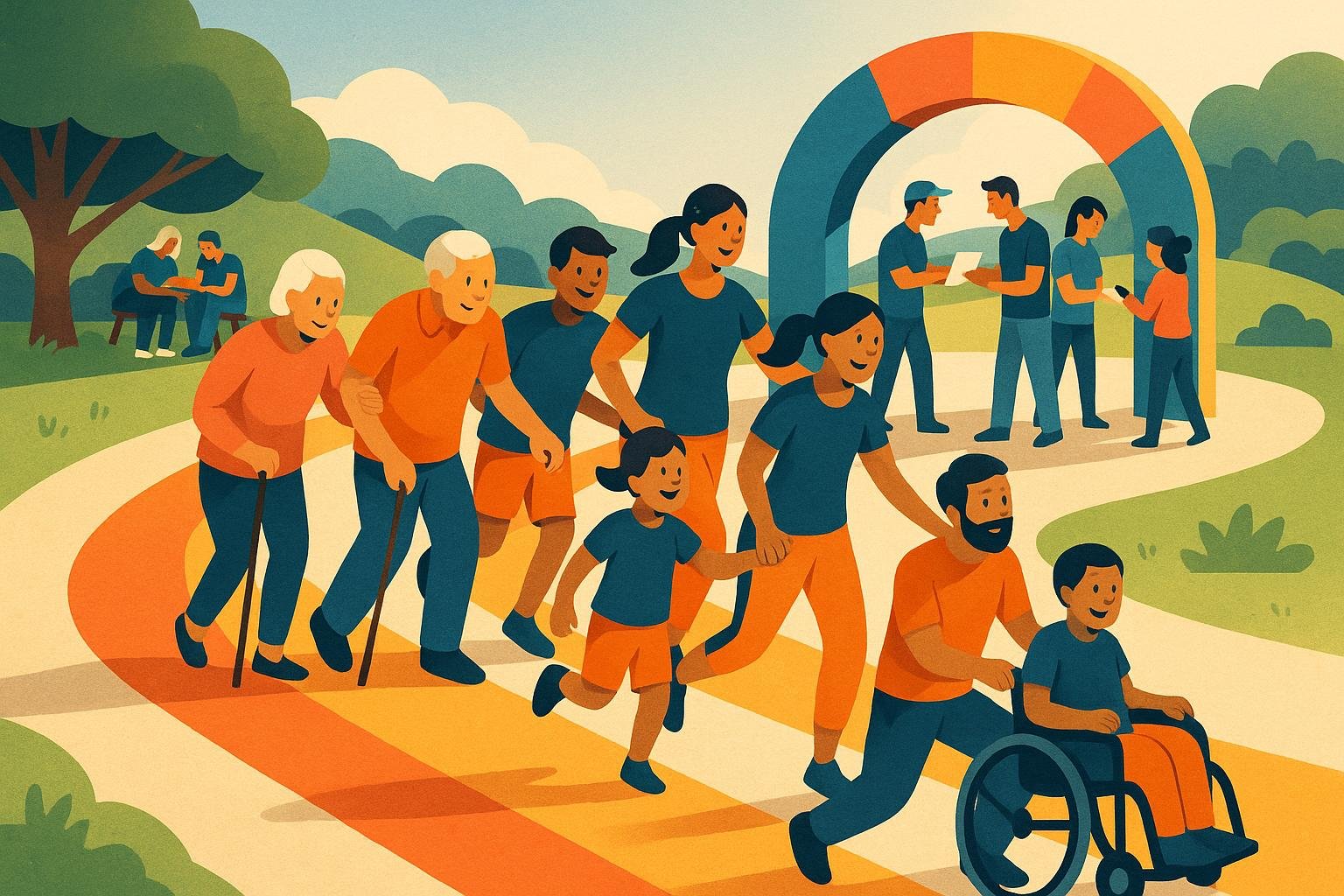
Practical guide for HR and events teams to run an inclusive Amazing Race corporate Family Day - checklist, missions, scoring, timeline, hybrid tips

Employees believe in CSR campaigns when company commitment is clear. See how collective participation can amplify credible social impact.