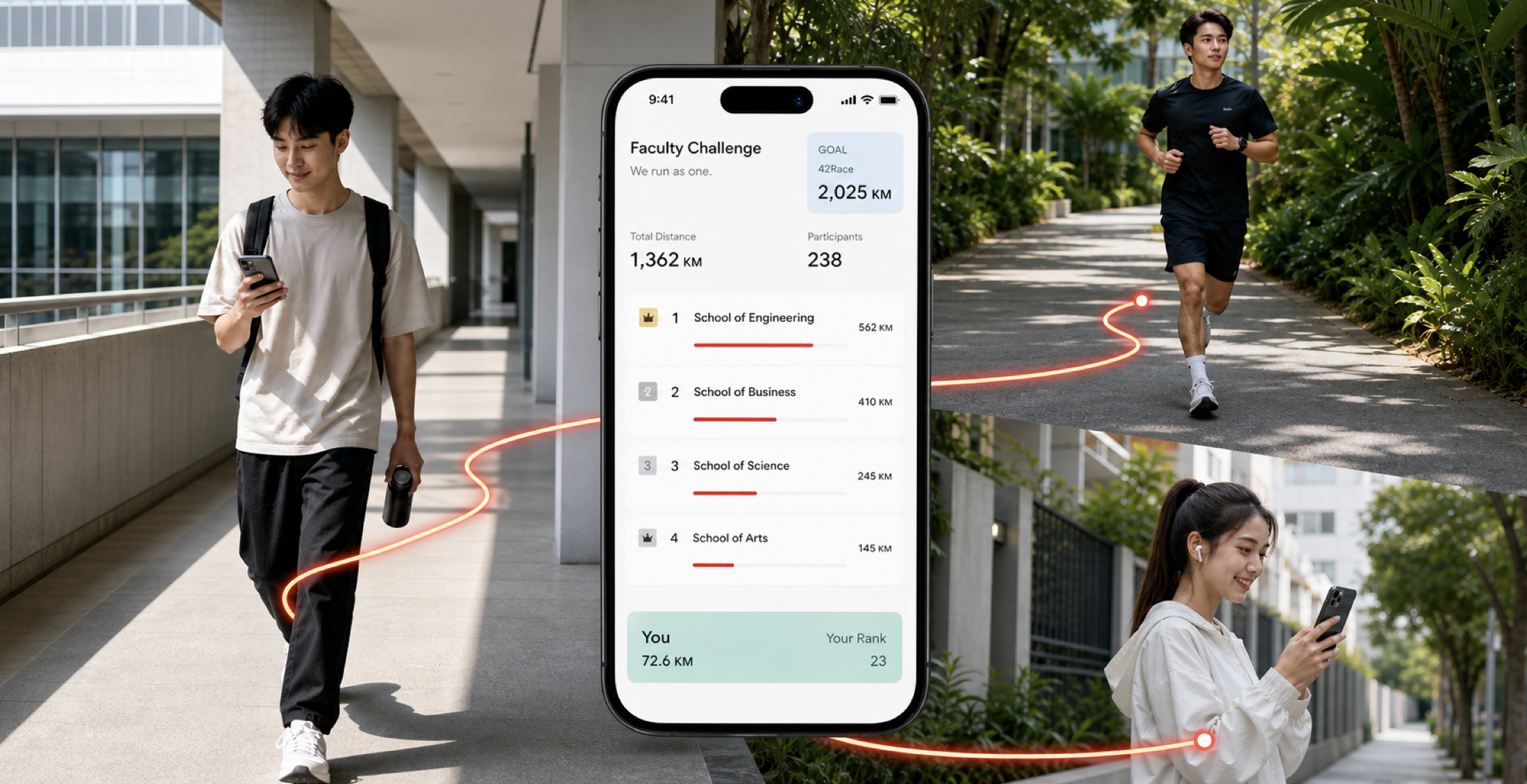
Should your next corporate run bring everyone to one starting line—or let employees participate wherever they are?
Both virtual and physical runs can support employee wellness, team spirit and corporate social responsibility. The better choice depends on what HR needs the programme to achieve.
A physical run creates concentrated energy and face-to-face connection. A virtual run offers flexibility, accessibility and regional reach. A hybrid format can combine both, although it also brings the planning requirements of two event types into one programme.
This guide compares the options so HR teams can choose the right format for their workforce.
A corporate virtual run allows employees to walk or run at their preferred location and time during a defined campaign period.
Participants record their activities through a supported tracking method. Their distance contributes towards personal, team or company-wide goals displayed on a campaign platform.
The format can include employees across Singapore and other countries without requiring everyone to attend one event.
A physical corporate run takes place at a specific venue, date and time.
Employees gather to complete a planned route, often followed by refreshments, awards or other company activities. The format may be organised as a private event or through participation in an existing public race.
Because everyone shares the same environment, the event can create a strong sense of occasion.
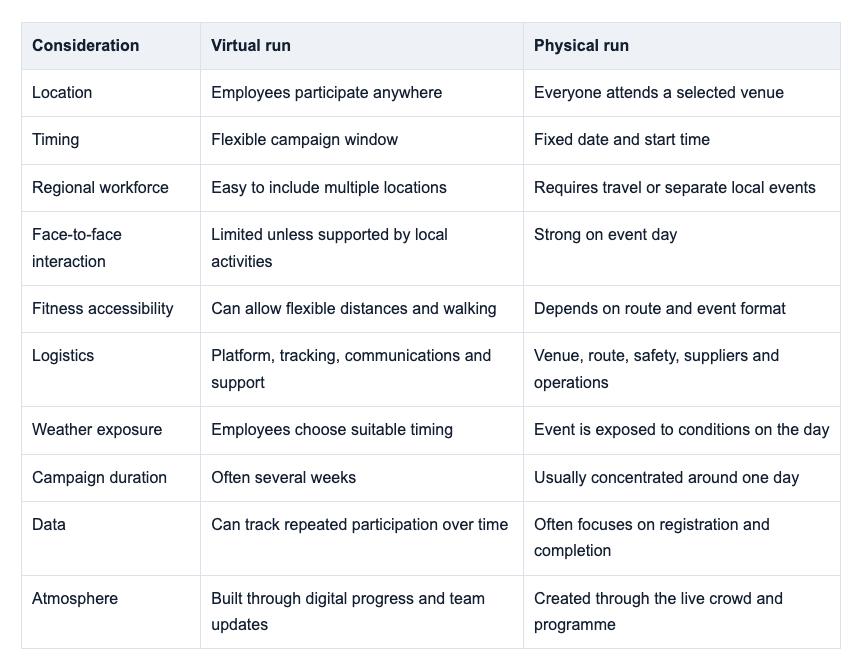
A virtual run is particularly useful for MNCs with regional offices, remote employees or frequent travellers.
Everyone can join the same campaign while completing activities locally. Country teams can appear on shared leaderboards and contribute towards one regional goal.
Employees may have shift patterns, caregiving commitments or client responsibilities that prevent them from attending a fixed event.
A multi-week virtual run lets participants choose a suitable time without missing the company activity entirely.
A physical run usually centres on one completion moment. A virtual campaign can encourage employees to move several times each week.
If the objective is to support consistent activity rather than complete one race, the virtual format may be a better fit.
Depending on the platform, HR may be able to review registrations, active participants, repeat activity, team participation and distance milestones.
Confirm the reporting capabilities before selecting a provider, as platforms differ.
A virtual format makes it easy to show progress towards a distance-linked donation target over several weeks.
Employees can watch the company move closer to the goal and understand how individual activity contributes to the shared result.
Music, company shirts, cheering colleagues and a shared finish line create a level of atmosphere that a digital leaderboard cannot fully reproduce.
If the objective is a major celebration or annual gathering, a physical event may deliver a stronger moment.
When the workforce is concentrated in Singapore and can attend on the same day, the geographical advantage of a virtual run becomes less important.
A live event encourages spontaneous conversations and shared experiences. Employees can participate with colleagues, meet senior leaders and celebrate together immediately after the run.
A physical run can be combined with a family day, carnival, awards ceremony, health screening or leadership programme at the venue.
Neither format is automatically inclusive.
A virtual run offers scheduling and location flexibility, but it may still exclude employees if the campaign depends on unsupported devices, demanding targets or complicated technology.
A physical event offers social support and an accessible shared route when designed well, but a fixed time and location will prevent some employees from attending.
For either format, HR should consider:
The question is not simply, “Can employees join?” It is, “Can different employees participate meaningfully?”
Engagement depends less on the format than on the campaign design.
A physical event with weak communication may attract registrations but produce limited connection before and after race day. A virtual run with no updates can become a lonely collection of individual activities.
For a virtual run, engagement comes from:
For a physical run, engagement comes from:
Choose the format that makes the desired employee behaviour easiest.
A hybrid run combines a physical event with a virtual participation window.
For example, Singapore employees may attend a live launch run while overseas colleagues join virtually. All eligible activities contribute to one company target.
This can provide the atmosphere of a physical event and the reach of a virtual campaign. It also requires clear rules so employees understand which activities count, how results are combined and whether live-event participants can continue recording distance afterward.
A hybrid format works best when the physical and virtual elements feel like one campaign—not two unrelated programmes sharing a logo.
Choose virtual or hybrid if the programme must include several countries or a large remote workforce.
Choose virtual for repeated activity over time. Choose physical for a shared event-day experience.
Physical events require venue, route, supplier and safety coordination. Virtual programmes require platform setup, communications, tracking support and participant assistance.
Review location, working hours, fitness levels, accessibility and technology—not only participant numbers.
Decide whether success means attendance, active participation, repeat activity, cross-office connection, employee feedback or CSR impact.
Choose a virtual run when flexibility, regional inclusion and activity over time are the priorities.
Choose a physical run when face-to-face connection and a memorable event day matter most.
Choose a hybrid run when the company wants a central live experience without excluding employees who cannot attend—but only if HR has the resources to connect both elements properly.
There is no universally superior format. The strongest programme is the one that aligns with the workforce, removes unnecessary barriers and gives employees a clear reason to participate.
Not always. Costs depend on participant numbers, technology, customisation, rewards, support and event requirements. Compare the complete scope rather than assuming one format is automatically less expensive.
Yes, when the campaign includes team targets, regular updates, participant stories and recognition. A leaderboard alone is unlikely to create meaningful connection.
Yes. This hybrid structure can work well for MNCs if the activity rules, timelines, tracking and rewards are consistent across locations.
Three to four weeks is a practical starting point for many corporate programmes. The appropriate duration depends on the objective and communication plan.
Design a corporate challenge around your workforce locations, engagement goals and operational requirements.
Start planning now.
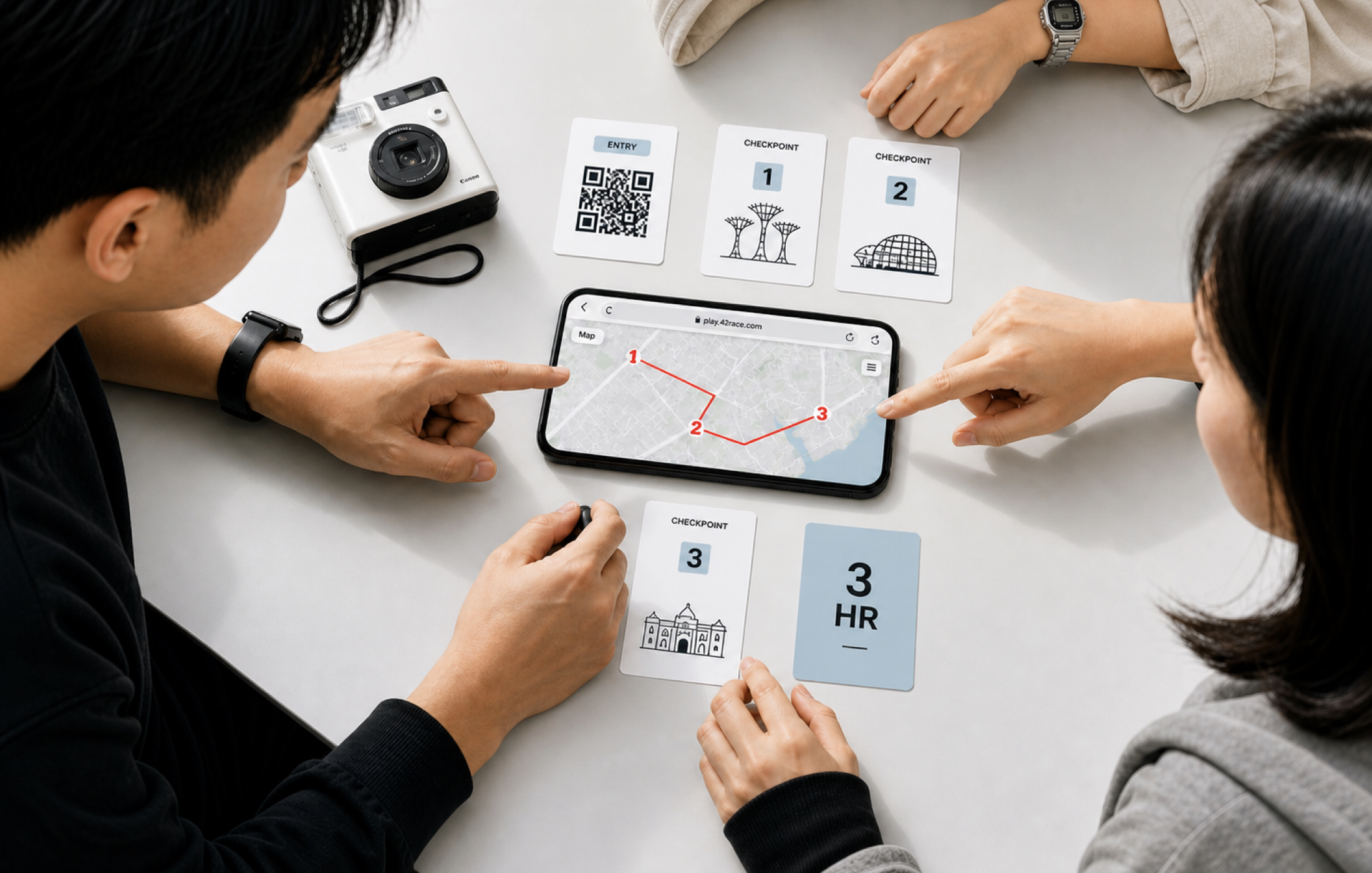
Practical, operational guide to designing an Amazing Race-style event for corporate teams: goals, format choices, logistics and inclusion.

Half‑day Amazing Race guide for Singapore teams: browser/QR onboarding, copy‑paste checkpoint tasks, sample scoring, minute timeline and hybrid options.