If your briefing room contains any of the following—cryptic trivia, impossibly precise directions or riddles that only a single person could know—participants will grumble, queue at checkpoints and default to guessing. The real task for HR, CSR and event leads is to design Amazing Race clues that invite teams to collaborate, move and laugh, not to humiliate or stall them.
Aim for “challengeable but solvable.” Difficulty should reward observation and teamwork rather than encyclopaedic memory. Ambiguity slows groups and creates frustration; deliberate ambiguity (progressive discovery) can be fun, accidental ambiguity is a fail. Local context matters: references to familiar Singapore landmarks, local language cues or cultural practices make clues feel clever; exotic trivia that only a specialist knows does not.
Why impossible trivia fails: it creates a single-point solution—one person either knows it or the team is stuck. That removes team dynamics, lengthens queues and turns a social activity into an exam.
Weak: “What year was the founder born?” — impossible trivia unless the place displays that fact. Improved: “Find the plaque that honours the founder and note the year on it.” — directs teams to an observable object and rewards reading, not memory.
Weak: “Solve: I speak without a mouth.” — abstract riddle that can stall varied-ability teams. Improved: “Listen under the arch to the object that echoes a single word. Record that word.” — converts a riddle into an observable, testable task.
Testing tip: never test only with puzzle fans. Include colleagues who will represent the least-engaged participant.
Prioritise clarity, teamwork and observable verification. Use local context to make clues feel relevant, avoid single-person trivia, and always field-test with mixed groups. That approach keeps the flow moving, protects your schedule and makes the event fun for everyone.
Set an expected solve time for each clue and design tasks that reward observation or simple problem-solving rather than specialist knowledge. Use progressive hints for trickier steps so teams can recover without blocking the whole event.
Yes — local references make clues meaningful, but only if the necessary information is visible or easily discoverable on site. Avoid obscure facts that require prior study; instead point teams to a plaque, landmark detail or common practice.
Run quick field tests with at least two small groups, one familiar with the area and one representative of typical participants. Time their progress, note confusion points and rewrite any wording that produces divergent interpretations.
We can workshop clue sets, provide field-testing protocols and adapt missions for Singapore workplaces.
BOOK A DEMO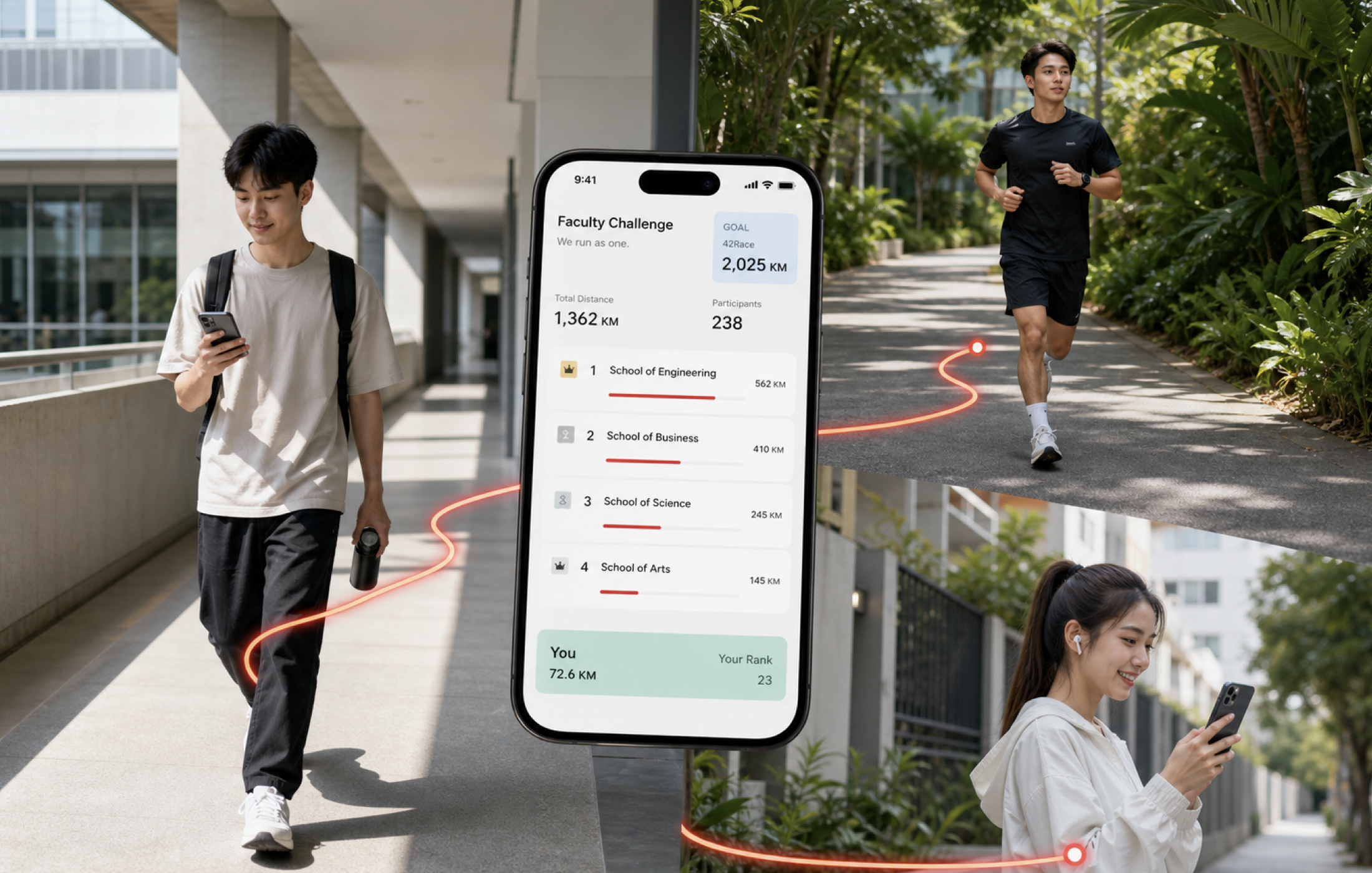
Virtual race offers a flexible, stress-free alternative to traditional running events by allowing participants to complete races at their own pace, on their own schedule.
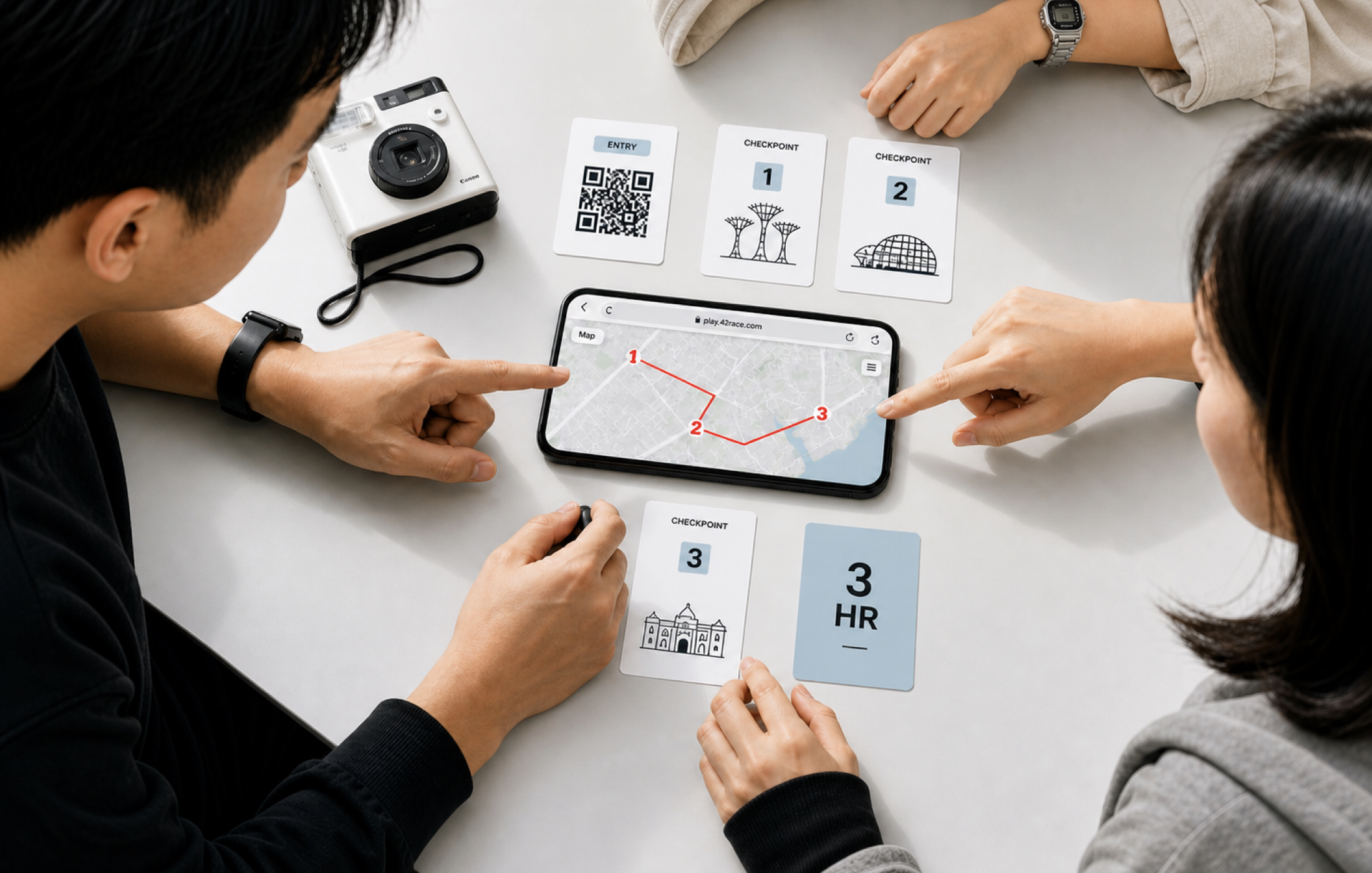
Practical, operational guide to designing an Amazing Race-style event for corporate teams: goals, format choices, logistics and inclusion.