Who are you designing for: parents with toddlers, primary‑age kids, teens and colleagues who'd rather stroll than sprint? The real question for a family day Amazing Race is not “what’s exciting?” but “what will every team actually do, safely and happily, without leaving anyone out?” Below are mission ideas and small-format event formats that work for mixed‑age corporate family days in Singapore and Southeast Asia.
Formats that match family households
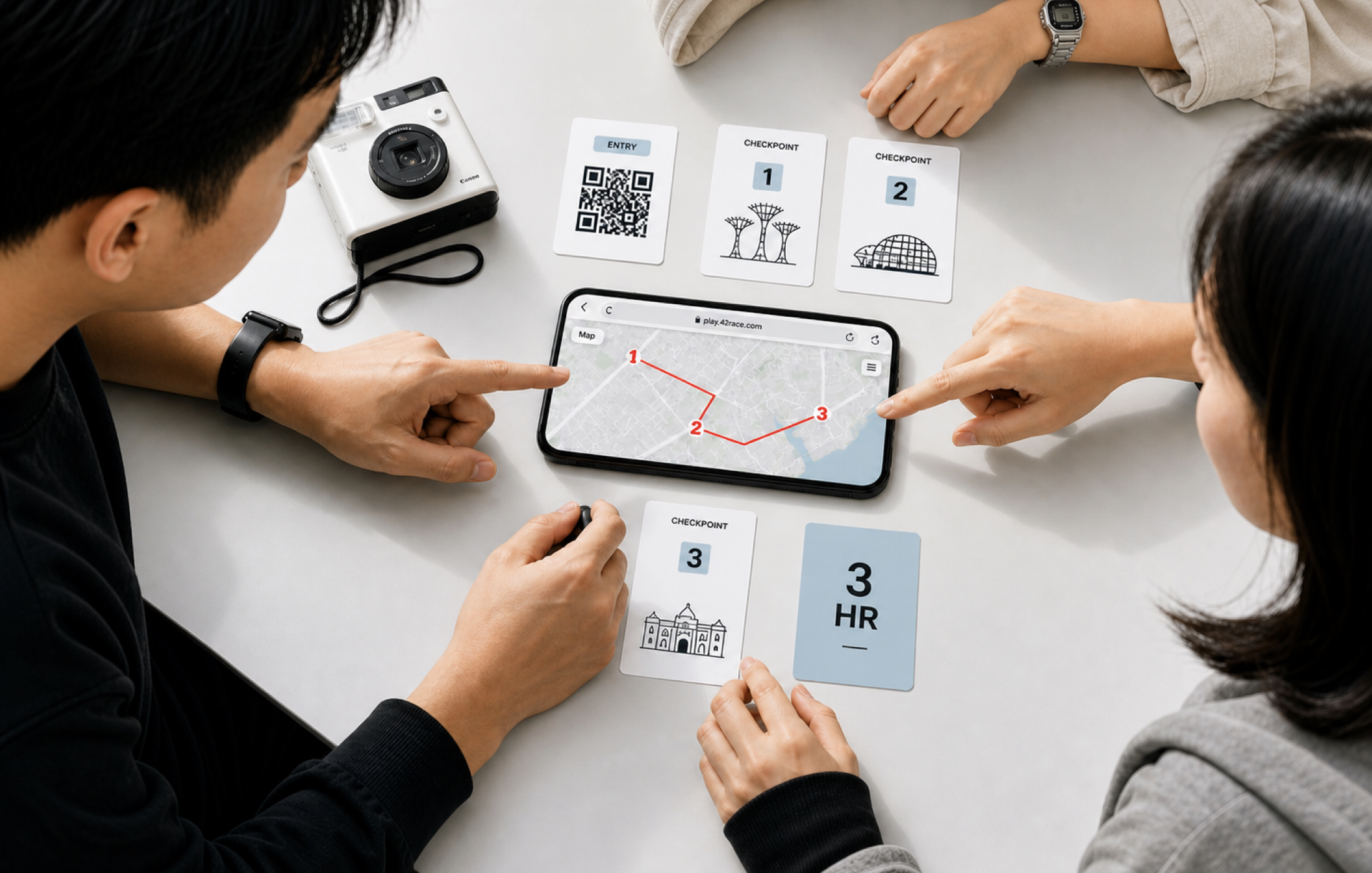
- Mini‑route (45–75 minutes): Four to six checkpoints within a sheltered campus or park loop. Short walks and a mid‑point rest area keep energy steady and parents comfortable.
- Station circuit (90 minutes, repeatable): Teams visit themed stations where volunteers run tasks on a fixed schedule. This avoids choke points and lets families join activities at their pace.
- Hybrid indoor‑outdoor festival: Combine an indoor clue hub with nearby outdoor discovery missions. Useful in rainy season and when young children need toilets and shade.
Mission types that actually work for mixed ages
- Photo scavenger missions: Give teams a simple list (e.g. “take a picture of three team members making a human pyramid with hats on”). Cameras or phones are fine; require an adult in every photo so kids aren’t unsupervised. Photo tasks are forgiving for different abilities and create sharable memories.
- Discovery tasks: Short, low‑intensity quizzes about a place (find the plaque, what colour is the dragon statue). These reward observation rather than speed and suit quieter kids and older adults.
- Hands‑on mini‑challenges: Simple tactile tasks—build the tallest paper tower in five minutes, balance a beanbag on a spoon course—where children can lead and adults assist. Keep materials safe and easy to reset.
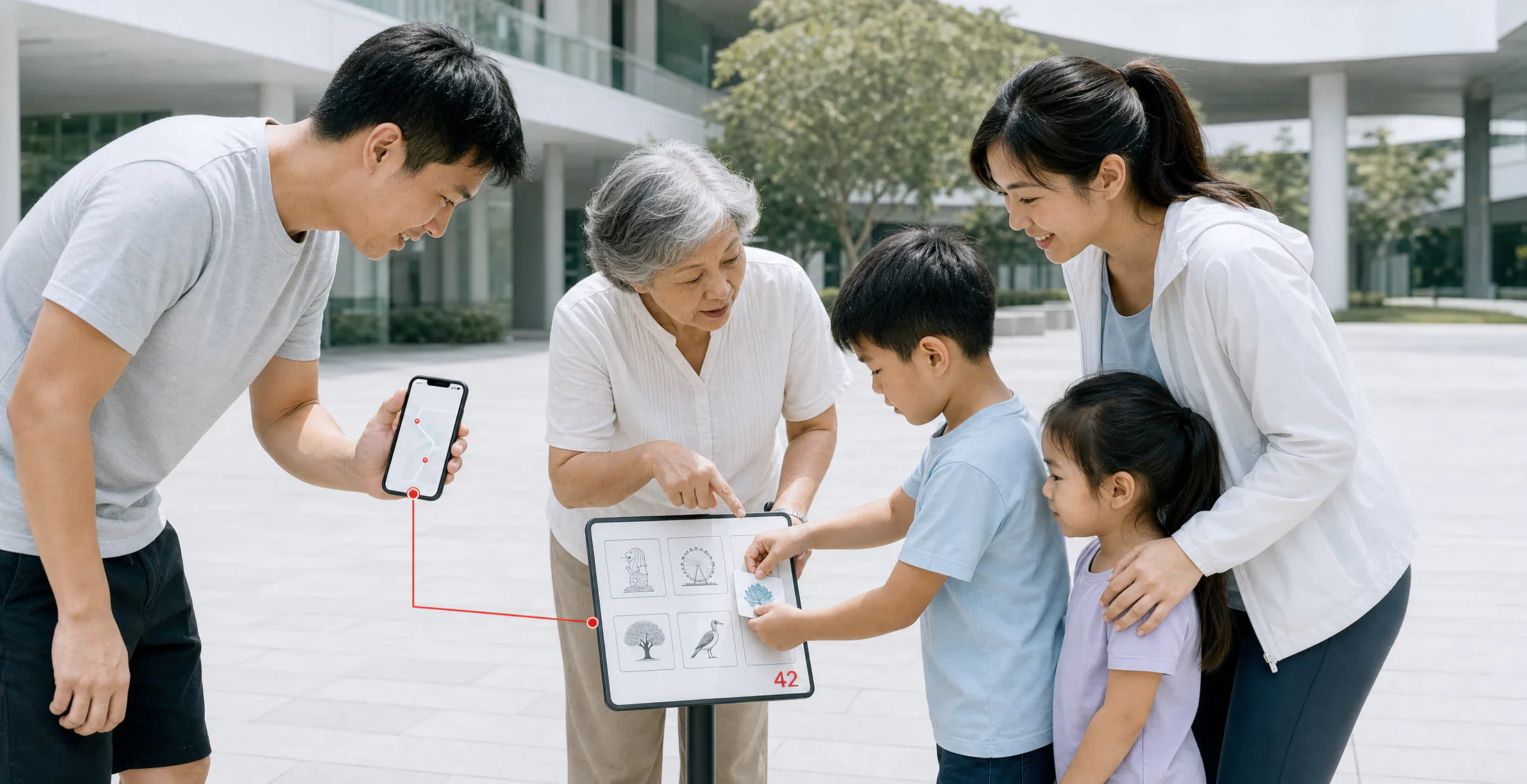
- Story clue relay: Read a short, age‑appropriate riddle that leads to the next checkpoint. Make clues picture‑based for younger children and optionally harder for teens, so teams can choose difficulty.
- Photo‑mission with creativity prompts: Instead of “find X”, ask teams to stage a themed tableau (e.g. “office superheroes”)—this encourages family collaboration and relaxed humour.
- Sensory stations: Smell, touch or sound boxes where a child describes an item and an adult writes the answer. Low exertion, high engagement.
Scoring and pacing for families
Prioritise completion and variety over pure speed. Use a points system that rewards finishing multiple task types and creative responses rather than the first arrival. Allow time buffers and an easy bonus task families can attempt if they finish early.
Operational notes you’ll actually use
- Schedule regular rest/refreshment points and shade. Singapore heat matters.
- Assign volunteers to every station to explain tasks, manage resets and keep kids safe. Never leave children unsupervised at tasks.
- Keep clue language short and use icons for younger readers. Offer a single adult‑only “fast clue” option for teams wanting more challenge without disadvantaging family teams.
Finish with a calm, inclusive final challenge—something everyone can join, like a collaborative mural or family photo wall that doubles as the prize ceremony backdrop.
Frequently Asked Questions
How long should a family‑friendly Amazing Race last?
Aim for 45–90 minutes of active play spread over a half‑day slot. Include rest and refreshment breaks so younger children and older family members aren't pushed for time.
Can children lead tasks without being unsupervised?
Yes. Design tasks where a child performs or directs with an adult present, such as reading a clue, taking photos or arranging props. Always require an adult in the team and have volunteers onsite to supervise stations.
How do we keep tasks low‑intensity yet engaging?
Choose observation, creativity and tactile challenges rather than races. Photo missions, story clues, sensory boxes and simple construction tasks let families participate together without physical strain.