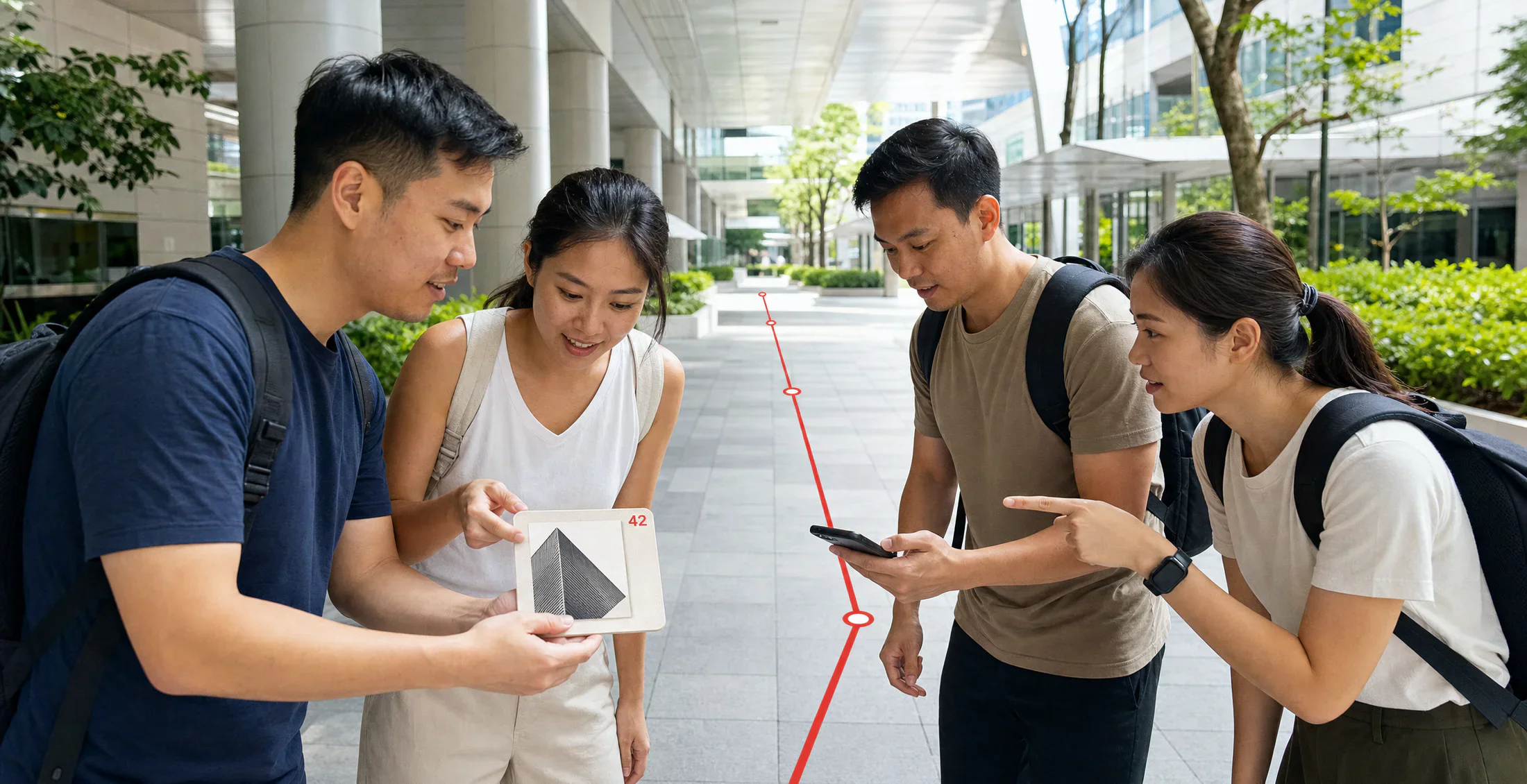
If you’re an HR, CSR or events lead considering an Amazing Race Singapore, you’re balancing two tensions: you want teams to explore the city and collaborate, but you must also keep movement, fairness and logistics workable in a half-day corporate schedule. This article shows practical choices that make the route, clues, checkpoints and scoring behave in the real world—not only on paper.
A useful city route groups checkpoints into compact clusters (three to five near each other) separated by a longer transfer leg. That reduces wandering and long queues at the busiest stops. In Singapore, clusterable neighbourhoods include Tiong Bahru, Chinatown, Kampong Glam and Marina Bay—each offers visible landmarks and varied terrain for tasks. The tricky part is predicting queues: narrow alleys and popular hawker centres are convivial but can become chokepoints during lunch.
Mix short physical tasks (carry a branded prop a short distance), observational clues (identify a façade detail), and creative media missions (short video or photo with a prop). That lets quieter or less-fit team members contribute meaningfully. Keep any public-interaction tasks controllable: ask for staged photos or answers found on plaques and storefronts rather than relying on strangers or requiring staff cooperation.
Use timed, sequential QR checkpoints or a simple web-based progress map to reveal the next clue only when a team completes a mission. That prevents accidental spoilers across groups. Avoid GPS-only validation as it can be inconsistent in dense developments; QR or photo evidence tied to brief judge review is more reliable. For digital maps, show route highlights and optional shelter points (air-conditioned venues) so teams can plan heat- and rain-aware moves.
Combine elapsed time with mission points. A simple model: time-to-complete gives a base ranking, with mission bonus points for accuracy, creativity or sustainability choices (for CSR events). Penalise rule breaches and safety lapses. Publish the scoring rules clearly before the start and use a visible live leaderboard for engagement, updated at each checkpoint.
Assign one gamemaster per cluster to judge missions and manage queues. Their job is to confirm evidence, hand out the next clue and apply minor tie-breakers. For busy checkpoints, prepare parallel sub-tasks so two teams can proceed at once—one solving a puzzle while another completes a short physical task.
Tell teams how long walking legs might be, suggest comfortable footwear, and point out nearby shelter and hydration options. Emphasise local courtesy and public-space awareness. Include a clear emergency contact and a simple rule about staying on public paths.
What matters most is designing choices that work when 8–30 teams hit the street at once: cluster checkpoints, mix mission types, use reliable QR/photo proofs, and score for both speed and intended behaviours. That keeps the event energetic, fair and manageable.
A typical corporate format runs two to four hours of active play within a half-day window to allow briefing and wrap-up. Shorter races need tighter clusters and fewer checkpoints; longer formats allow more creative missions and staggered starts.
Permit requirements depend on the specific location and activity; organisers should check with local authorities or venue owners for anything that uses private property or blocks pedestrian flow. Design tasks to work from public paths and sheltered public areas to reduce the need for permissions.
Use a hybrid scoring system that combines elapsed time with mission points so different strengths matter. Include tasks that reward observation, creativity and teamwork as well as speed, and make scoring rubrics transparent before the race.
We can draft a Singapore-ready route, missions and leaderboard setup for your event.
BOOK A DEMO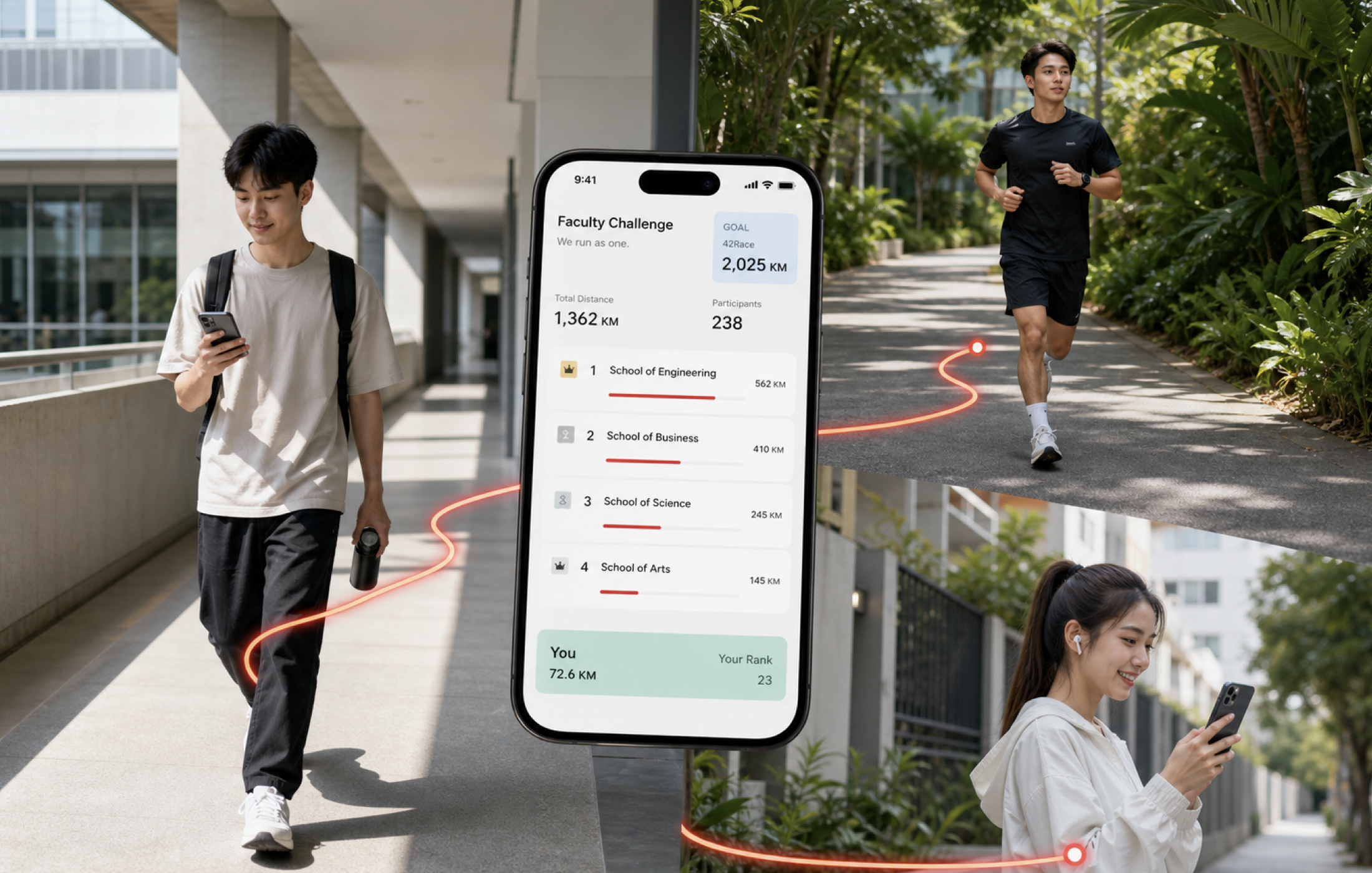
Virtual race offers a flexible, stress-free alternative to traditional running events by allowing participants to complete races at their own pace, on their own schedule.
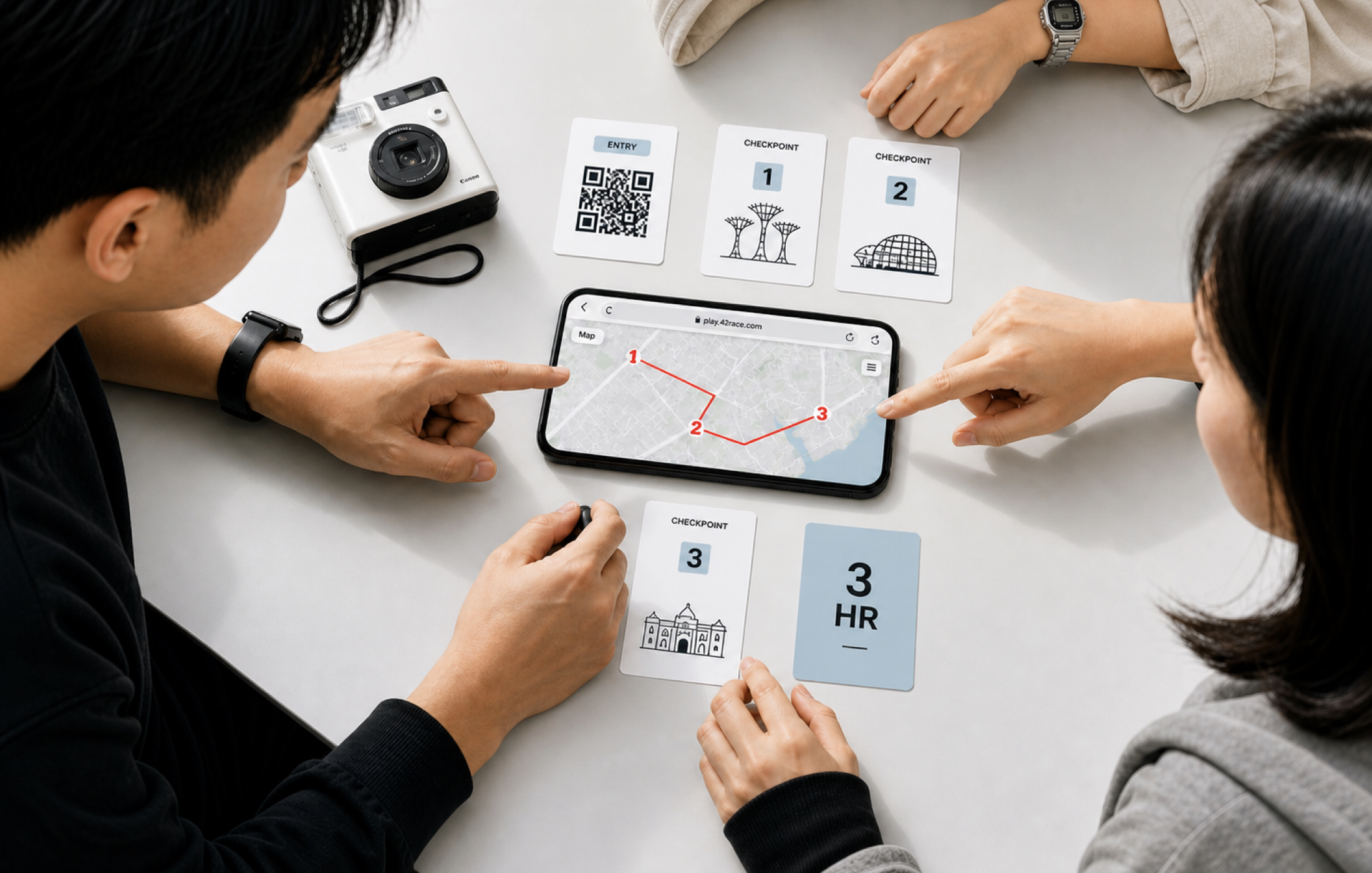
Practical, operational guide to designing an Amazing Race-style event for corporate teams: goals, format choices, logistics and inclusion.