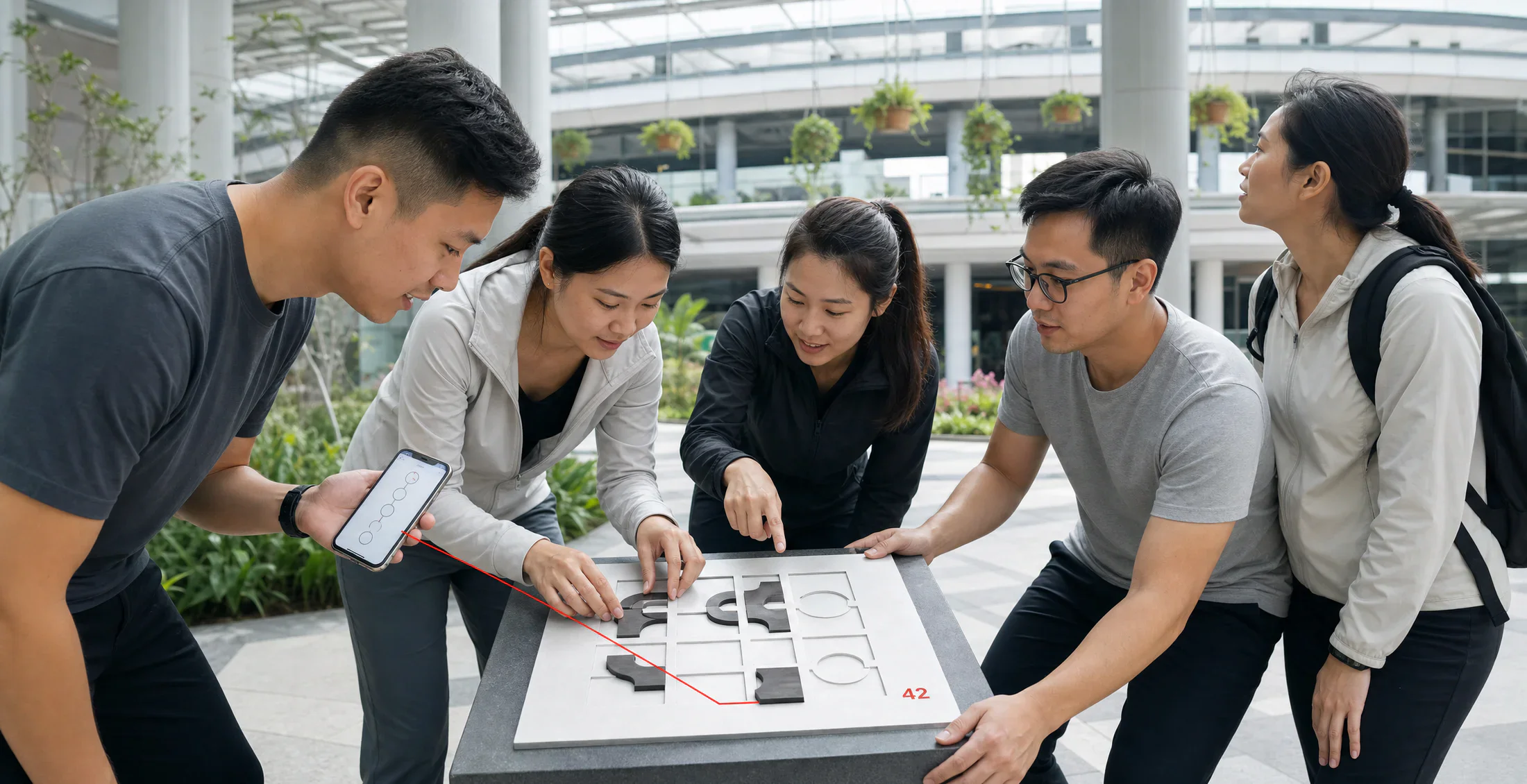
You’re organising an Amazing Race–style team challenge for employees in Singapore or Southeast Asia and the first operational question lands fast: how many people per team? The answer matters because team size shapes who leads, who gets left out, how quickly teams move between checkpoints and whether queues form at popular challenges.
What each team size actually changes
Teams of 2 — Lean, fast, but fragile
- Collaboration: Decisions are quick; one dominant personality can steer the whole team.
- Role distribution: Limited. Each person must cover multiple tasks (navigation, puzzle-solving, carrying props).
- Movement: Very mobile; easier on crowded walkways and transport.
- Inclusion: Low opportunity for quieter staff to contribute.
- Checkpoint congestion: Small teams move through faster but fewer participants at interactive tasks can make some checkpoints feel underused.
Teams of 3 — Balanced agility and diversity
- Collaboration: Enough opinions for checks and balances without long debates.
- Role distribution: Natural division (navigator, communicator, doer) but still compact.
- Movement: Mobile with manageable luggage and transit needs.
- Inclusion: Better for mixed abilities; quieter members still get a role.
- Congestion: Low–medium; still quick through checkpoints.
Teams of 4 — Most common corporate sweet spot
- Collaboration: Varied skills and natural sub-teams for simultaneous tasks.
- Role distribution: Easier to allocate specialised roles (leader, researcher, runner, recorder).
- Movement: Slightly slower; needs more coordination moving between sites.
- Inclusion: Good for diverse strengths and psychological safety for introverts.
- Congestion: Medium; can create a backlog at small-capacity challenges if many teams choose the same checkpoint.
Teams of 5 — More capability, more coordination cost
- Collaboration: Richer idea pool but risk of social loafing and longer decision time.
- Role distribution: Strong task coverage; can run parallel missions with planning.
- Movement: Noticeably slower on stairs, narrow walkways, or public transport.
- Inclusion: High potential for participation, but quieter members may be sidelined.
- Congestion: Higher; large teams can overwhelm small challenge stations.
Teams of 6 or more — Powerful but organisationally heavy
- Collaboration: Good for complex, multi-stage challenges but meetings and choices slow down.
- Role distribution: You can allocate specialists and spokespeople; logistics become the dominant task.
- Movement: Bulkiest; expect delays, transport booking needs and permit considerations for public spaces.
- Inclusion: Can be inclusive if tasks are explicitly structured; otherwise some members become observers.
- Congestion: High risk of checkpoint queues and volunteer overload.
How to choose: a short decision framework
- Objective: If the event is about speed and movement (fitness, transit), favour 2–3. If it’s about inclusion, collaboration and problem-solving, favour 4–6.
- Venue and route: Tight urban routes, sheltered walkways and heavy rain-prone Singapore afternoons favour smaller teams. Large campus areas or controlled indoor venues suit larger teams.
- Challenge design: If many checkpoints require simultaneous hands-on interaction, limit team size or design parallel roles so everyone contributes.
- Time and volunteer capacity: Bigger teams need more oversight, longer debriefs and larger briefing spaces.
- Inclusion goal: For broad engagement, keep teams at 3–4 and build mixed-role missions so different personalities contribute.
If you must pick one default for corporate runs, choose teams of 3 or 4 and design challenges so quieter members can take clear, measurable roles. That balance gives mobility, role clarity and good participant experience across Singapore-style venues.
Frequently Asked Questions
Is there a single ‘best’ Amazing Race team size for corporate events?
No. The best size depends on your objective, venue and participant mix. Small teams favour speed and mobility; larger teams support diverse skills but require more coordination and oversight.
How does Singapore’s climate and transport affect team size choices?
Heat, sudden rain and crowded walkways favour smaller, more mobile teams to reduce fatigue and delay. If you plan longer distances or public transport legs, factor in comfort and transfer times for bigger teams.
Can challenge design reduce congestion for larger teams?
Yes. Use parallel tasks, staggered start windows, capacity limits per checkpoint and timed slots. That lets larger teams contribute meaningfully without creating queues or volunteer overload.