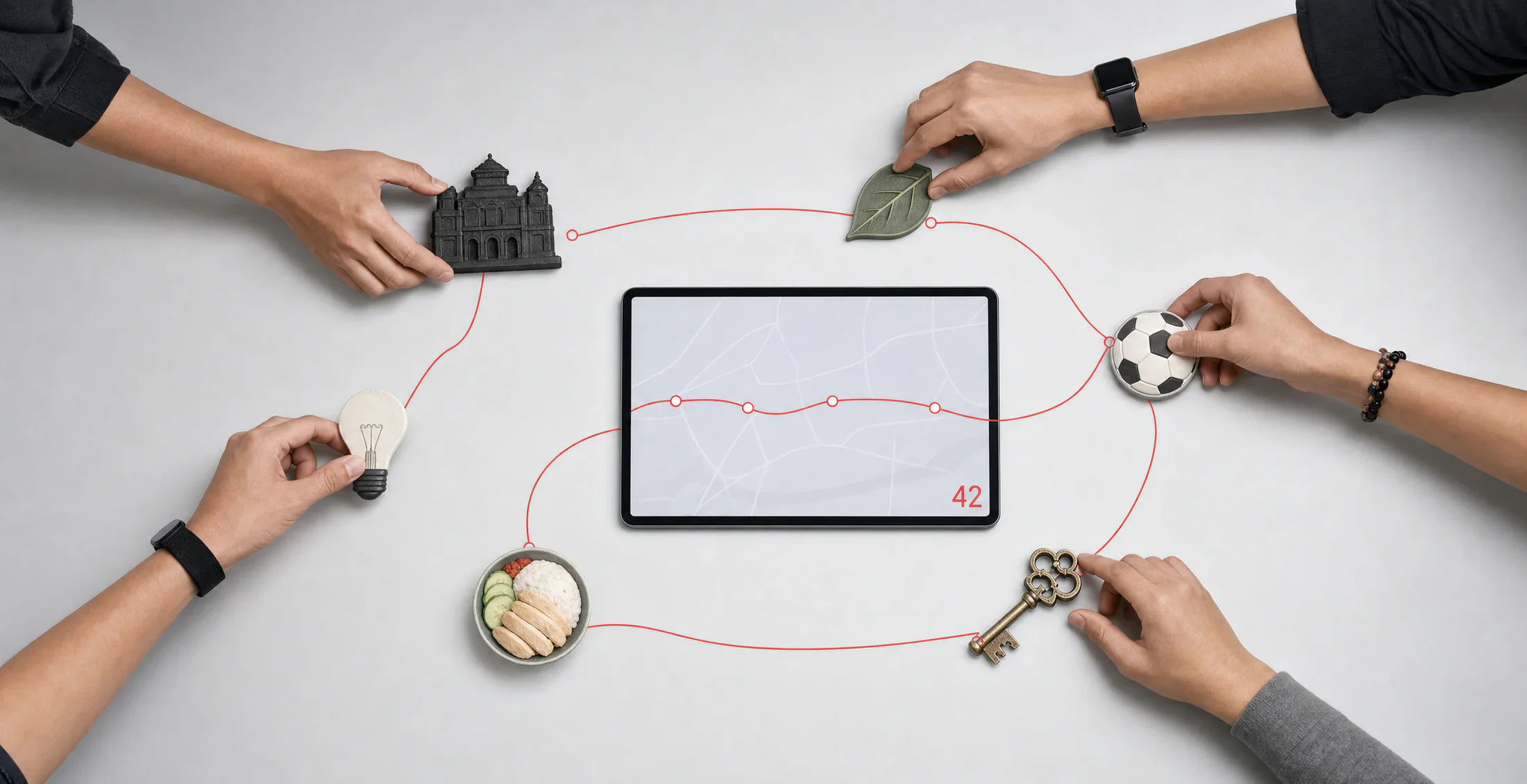
You need an Amazing Race that actually runs on the day — not just a pretty theme. Choosing one of these Amazing Race themes will change how you design clues, missions and permissions, and determine whether teams queue, wander off or finish early. Below are ten themes with operationally useful ideas that affect tasks, locations, volunteer roles and risk control.
A strong theme alters mission logic: who can contribute, what counts as proof, which public spaces you can use and what permissions you must secure. Each theme note below focuses on task design and realistic constraints for Singapore and Southeast Asia.
Clues point to conserved shophouses, museums and community centres. Tasks: decode Peranakan motifs, collect a permission-stamped postcard from a heritage volunteer, or interview a local artisan with prepared questions. Keep missions on public footpaths or inside venues with pre-arranged access; avoid asking teams to interrupt businesses without permission.
Replace souvenir grabs with low-waste missions: identify recycling icons, complete a short litter-collection photo mission with time-limited bags, or solve a puzzle about local energy sources. Use controlled sites (parks with NParks permits) and provide gloves and hand sanitiser. Do not ask participants to handle hazardous materials.
Missions use internal archives and colleagues: locate a legacy artifact in HQ, answer trivia using an internal microsite, or find and photograph a retired product on display. Keep personal data out of clues and arrange indoor checkpoints to avoid public-permit issues.
Clues are prototyping challenges: rapid-paper prototypes, limited-currency “resource” trades between teams, or QR-linked micro-simulations. Use indoor breakout spaces and staff facilitators so safety and timing are controlled; avoid unmonitored physical builds.
Turn judgements into sensory tasks: blind-taste matching, ingredient-spotting around a hawker centre with vendor consent, or assembling a simple snack. Seek vendor permission, limit queues with timed slots and provide shade/water for heat management.
Design walking loops with short micro-missions at café counters, murals and community boards. Use map-reading clues and local-business stamps. Keep loops short, public and on sheltered paths; schedule start-waves to prevent crowding.
Replace trivia with physical skills scaled for mixed fitness: timed dribbling, accuracy throws, or teamwork relays. Offer alternative low-impact versions and provide medical/first-aid guidance; never demand high-risk stunts.
Missions focus on problem-solving and role-play: discover a “villain’s” clue, decode a comic-strip puzzle, or complete a rescue-style relay using props. Keep role-play respectful of public space and pre-brief volunteers handling interactions.
Use layered clues, red herrings and forensic-style evidence collection (photos, timestamps). Centralise sensitive clues at staffed checkpoints so judges can verify answers; avoid asking teams to search private property.
Tasks explore urban systems: match transport icons, plan an efficient micro-route, or sketch a sustainable building brief. Use civic touchpoints and indoor debrief spaces for presentations. Be careful not to imply municipal endorsement and avoid asking participants to interact with official infrastructure.
End your planning by listing required permits, making alternative low-effort task tracks for mixed-ability teams, and scheduling start waves to reduce queues. A theme can lift engagement, but it only succeeds when missions, permissions and participant safety are designed to match it.
Pick themes that let teams split tasks so different people contribute — for example, a food challenge with tasting and a simple assembly task, or a neighbourhood loop with short photo missions. Always provide low-effort alternatives and clear timed slots to keep people included.
You’ll usually need venue approvals for indoor checkpoints and vendor consent for tasks in hawker centres or shops. For parks and large public gatherings, check NParks or local town council rules and plan start waves to manage crowding.
Use timed slots, staggered starts, multiple identical task stations, or digital submissions (photo/QR) to decentralise verification. Staffed checkpoints should have clear throughput roles: verifier, scorer and queue manager.
We can design theme-led missions, staffing plans and permit checklists for your team size and route.
BOOK A DEMO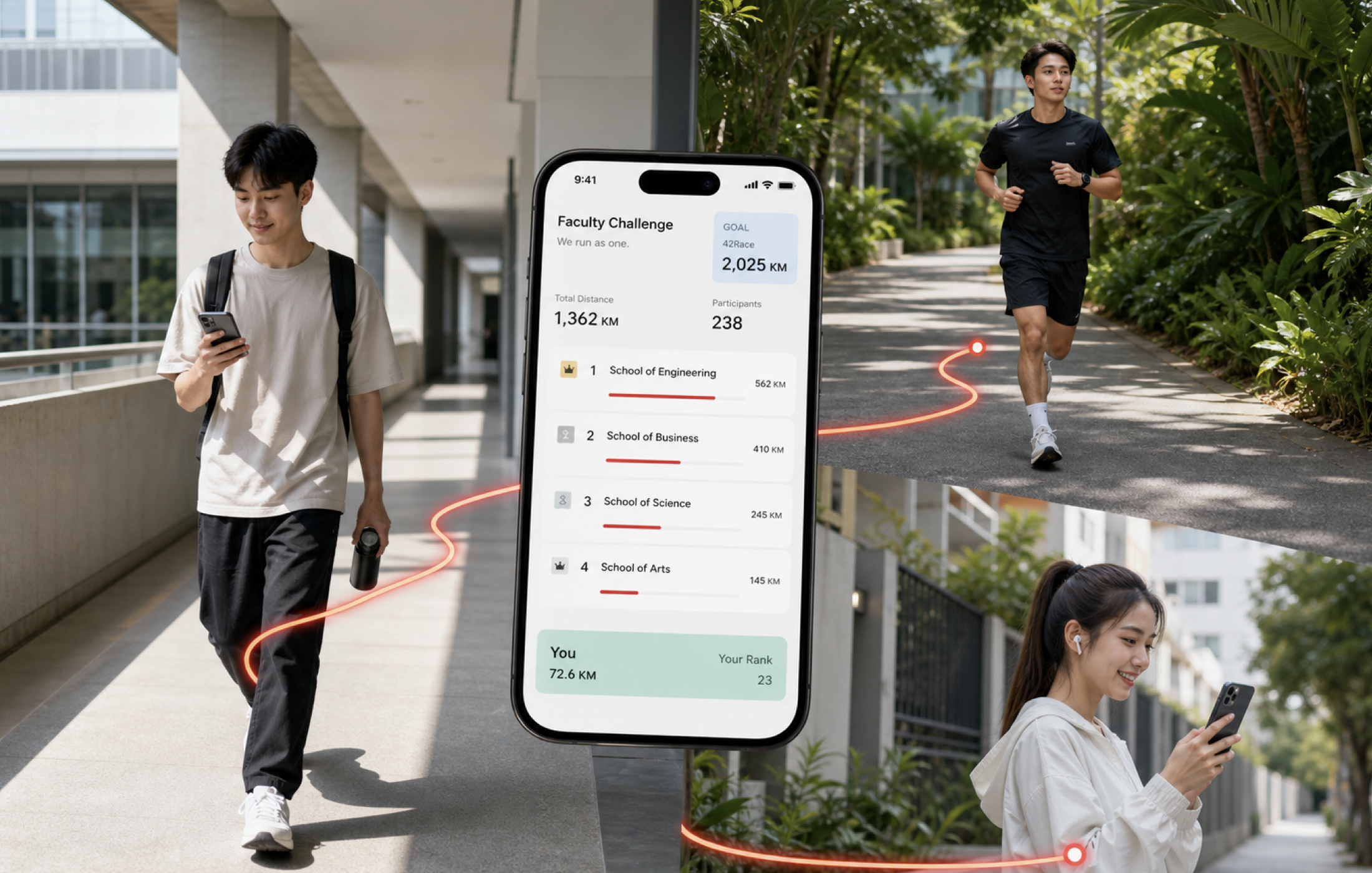
Virtual race offers a flexible, stress-free alternative to traditional running events by allowing participants to complete races at their own pace, on their own schedule.
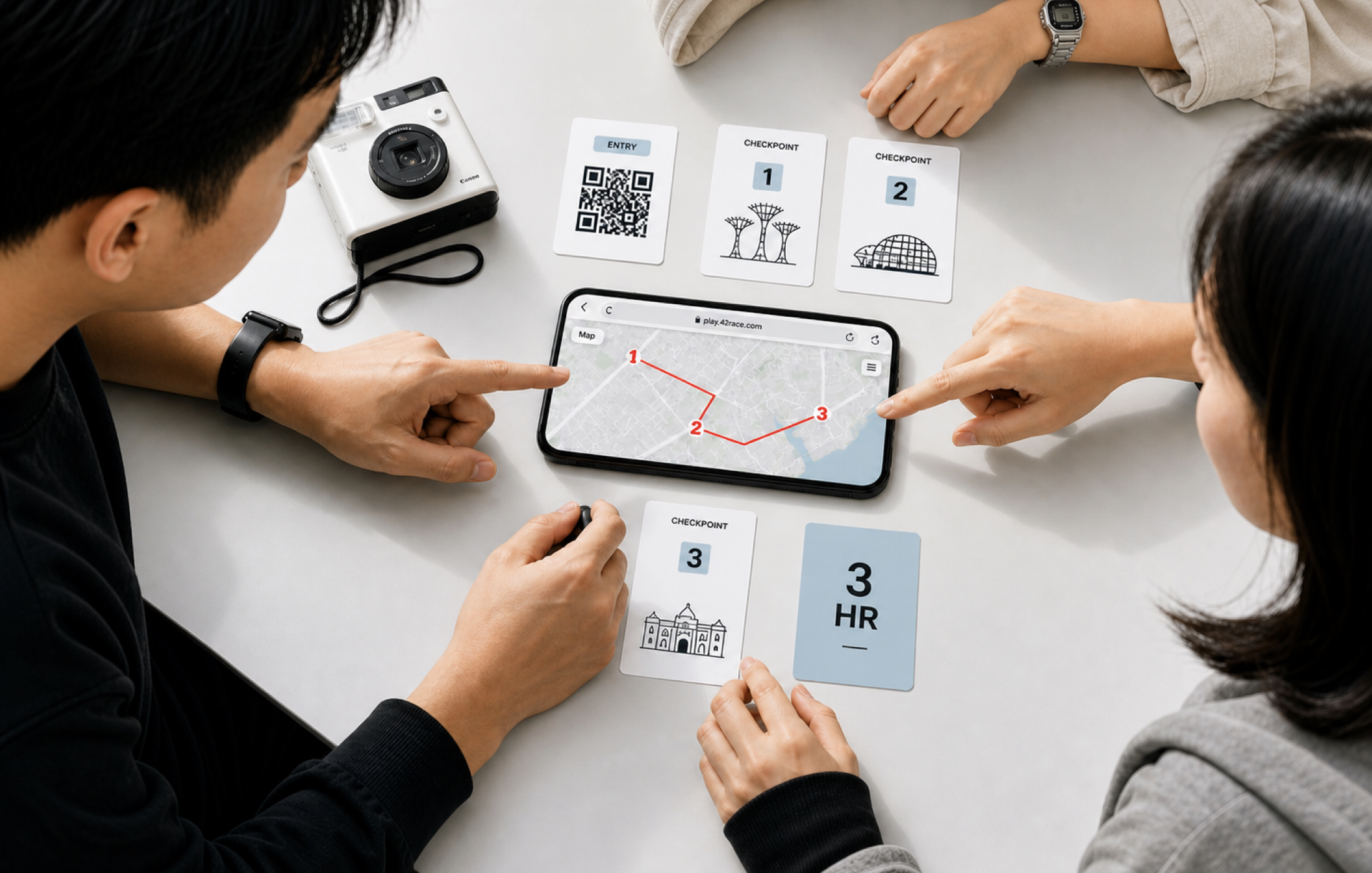
Practical, operational guide to designing an Amazing Race-style event for corporate teams: goals, format choices, logistics and inclusion.