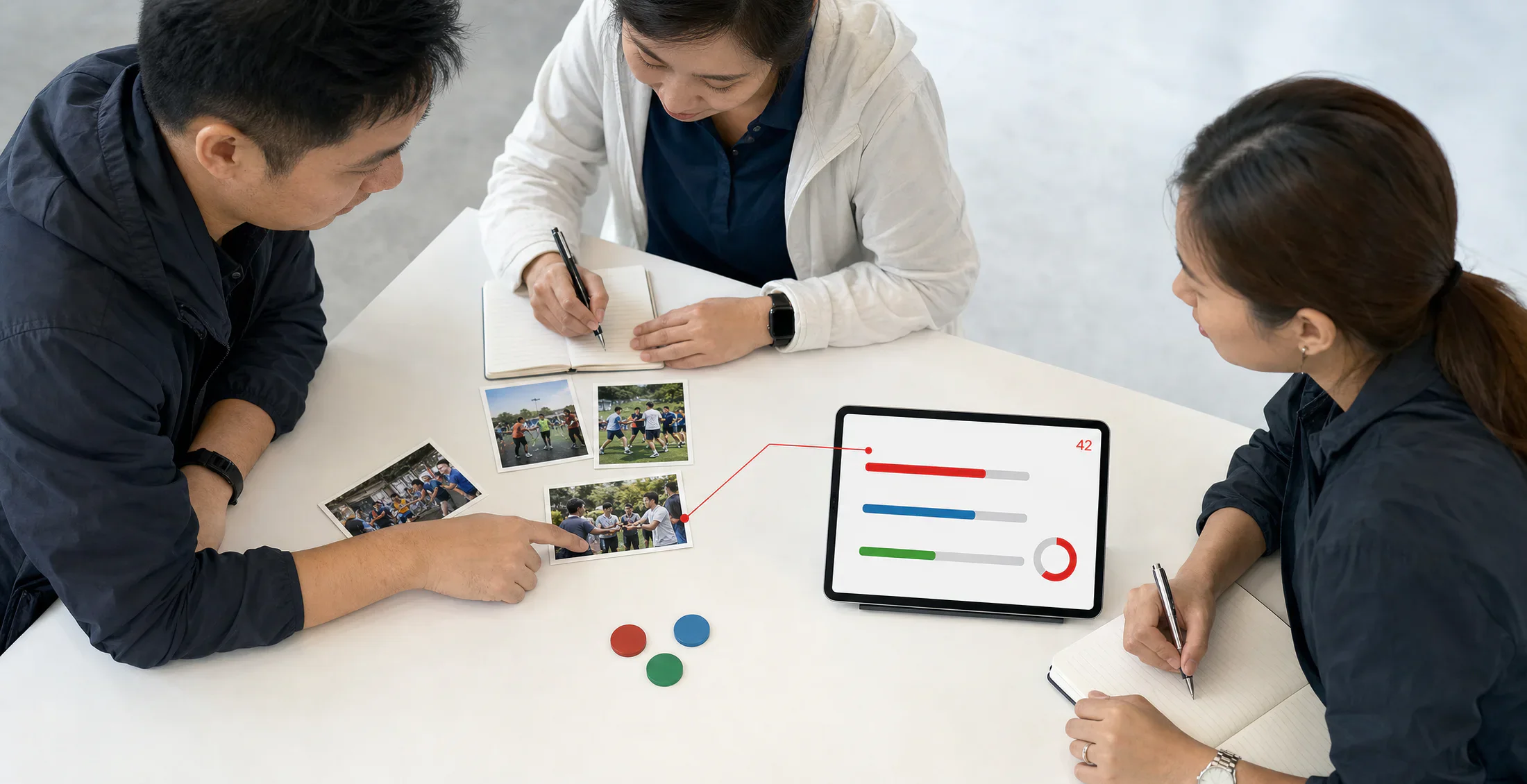
Opening the right question matters: did the day actually change anything beyond a few laughs? HR and event leaders often rely on “everyone had fun” as the verdict. That’s a start, but it misses whether the activity met your operational objective — for example better collaboration between two departments, clearer role-sharing under pressure, a community‑facing CSR outcome, or repeated engagement over time.
Before: collect baseline data. Ask a short pre‑event survey about current cross‑team collaboration, expectations and a simple sentiment score. Record who was invited, approvals needed and registered teams.
During: use checklists and gamemaster logs. Track start times, mission completions, rule clarifications requested, bottlenecks and volunteer interventions. Capture simple observational metrics: queue lengths at checkpoints, average task time and number of team swaps or collaborations formed.
After: run a short survey within 48 hours with both quantitative ratings and one prompt for what changed. Combine that with event logs to see whether low completion correlated with certain checkpoints or times. Hold a quick debrief with organisers and at least one representative from each department.
No single metric proves success. Treat them as a diagnostic kit. High attendance but low active participation points at a poorly matched format or shy participants. Good completion but poor sentiment suggests the activity was achievable but not meaningful. Strong cross‑team interaction with low repeatability may mean the event catalysed a one‑off social boost rather than lasting behaviour change. Use department‑level breakdowns to decide whether the programme requires targeted follow‑ups.
The practical rule: pick two primary objectives before the event (for example: improve cross‑team collaboration and increase CSR involvement). Map each objective to two measurable indicators (one behavioural, one attitudinal). After the event, triangulate — do the behavioural signals and survey responses point the same way? If not, dig into the logs and qualitative feedback for where the gaps are.
Frequently align measurement with who will act on the insights: HR, sustainability leads, or department heads. That makes the results actionable rather than decorative.
There isn’t one. The most useful single metric is a combination: a behavioural measure (for example cross‑team interactions or task completion) paired with an immediate attitudinal score. That combination shows both what people did and how they felt about it.
Send the main survey within 48 hours while impressions are fresh, and consider a short follow‑up at six to eight weeks to measure any sustained changes in collaboration or behaviour. The second pulse is especially important for longer‑term objectives like process change.
Yes. You can capture attendance, completion and observational logs with simple spreadsheets and volunteer checklists, and run short paper or emailed surveys. Digital tools help scale and reduce transcription errors, but the insight comes from consistent capture and thoughtful triangulation of metrics.
We can design the measurement plan, capture during the event and deliver a concise insights report.
BOOK A DEMO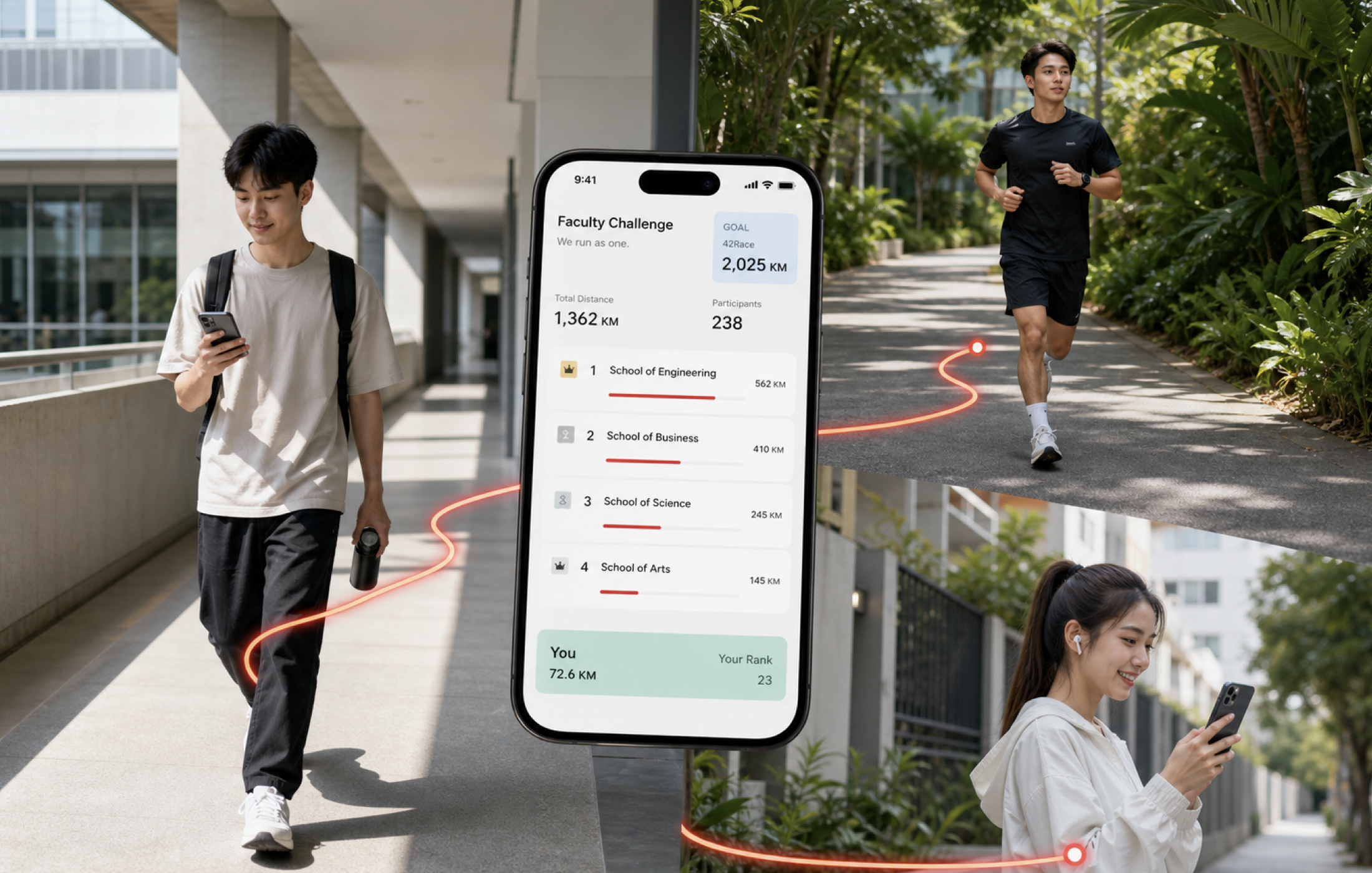
Virtual race offers a flexible, stress-free alternative to traditional running events by allowing participants to complete races at their own pace, on their own schedule.
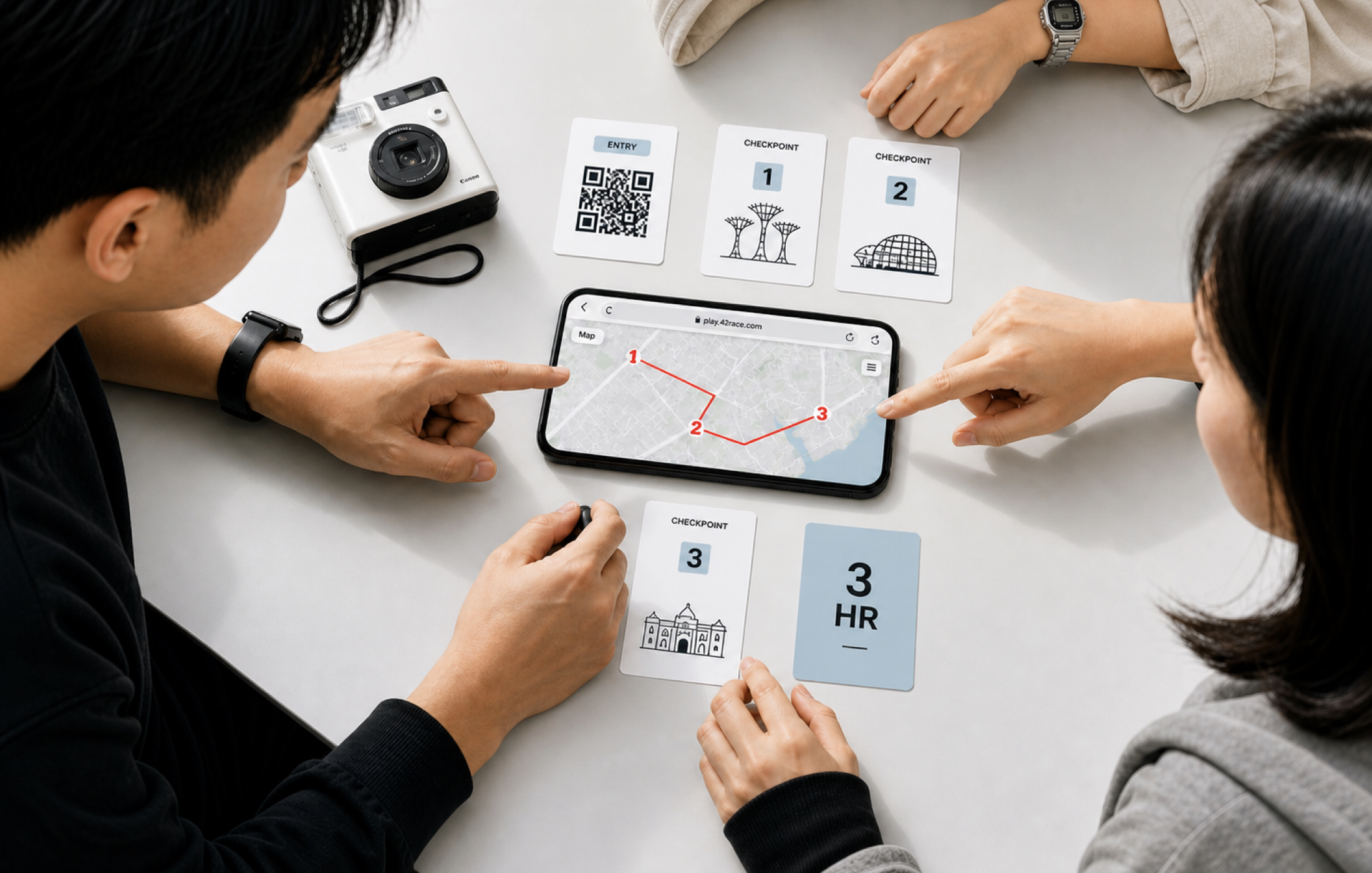
Practical, operational guide to designing an Amazing Race-style event for corporate teams: goals, format choices, logistics and inclusion.