
Virtual Runs

Team Building for Hybrid and Regional Teams: What Can Companies Do?

July 24, 2026
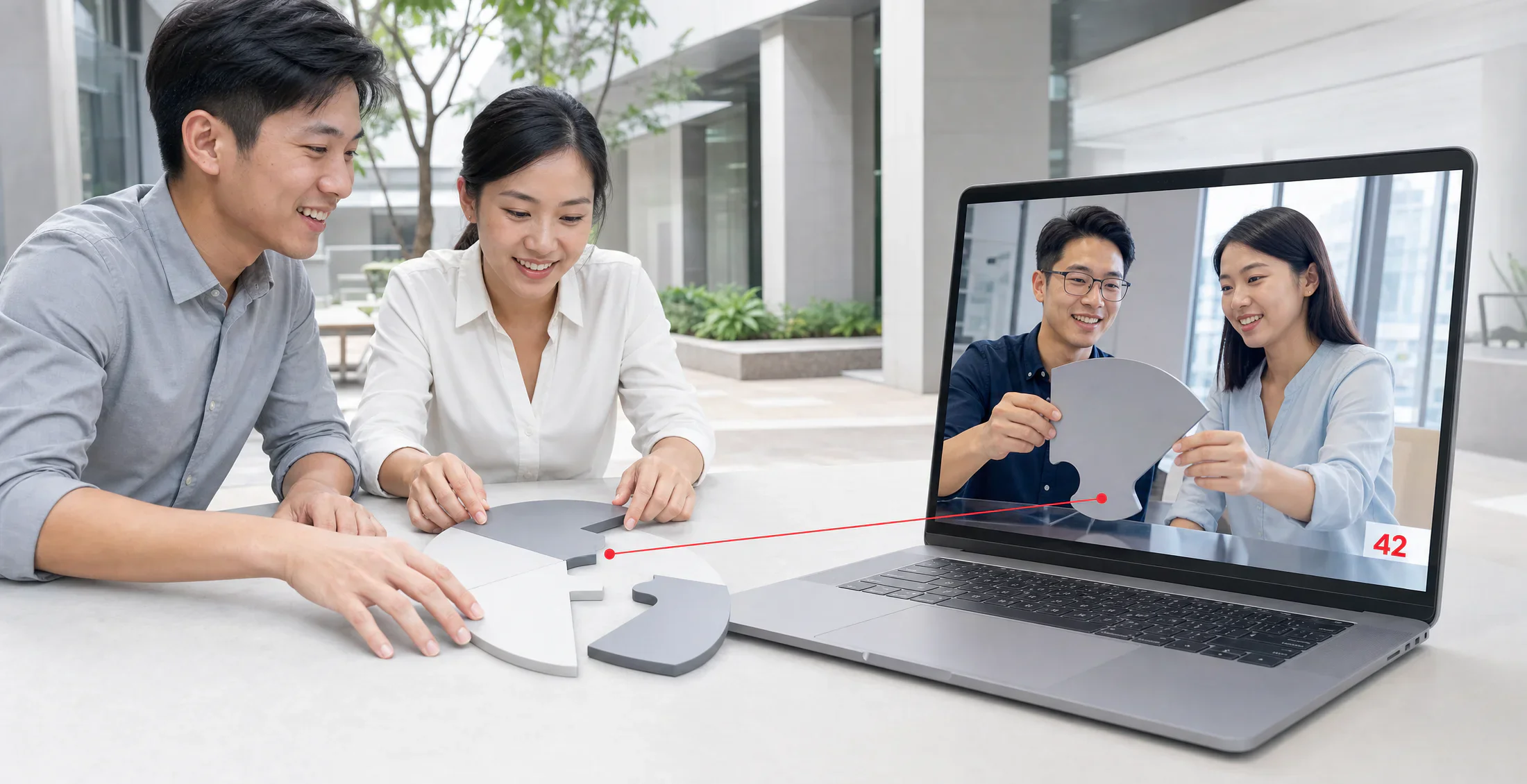
Asian colleagues take part in a purposeful team activity in a clean Singapore setting.

You need cross-office connection—but people are split across Singapore and neighbouring regional offices, with some staff remote, some in-office and limited travel budgets. The real question isn’t whether to run a team-building day; it’s which format will actually make teams feel closer without wasted time or embarrassment. Below are the practical choices and the trade-offs HR and event leads should weigh.

The four realistic formats and when each fits

Fully physical (everyone in one place)

  • What works: concentrated social bonding, shared meals, hands-on challenges that require physical teamwork and presence.
  • Trade-offs: highest travel cost and coordination, vulnerable to schedule friction across time zones and business cycles. Best when leadership wants a flagship annual offsite, or when there are clear budget allowances for travel and accommodation.

Fully virtual (everyone online)

  • What works: low cost, easy to include distributed participants, repeatable across offices. Good for monthly or quarterly connection points.
  • Trade-offs: empathy gaps, “camera fatigue” and less organic cross-office mingling. Choose this when travel is impossible or your goal is routine touchpoints rather than deep relationship resets.

Hybrid (some local hubs, others remote)

  • What works: small co-located groups connected by a shared digital experience—local face time plus cross-office interaction. This is the common practical compromise for Singapore HQ with regional teams.
  • Trade-offs: risk of two-tier experience where in-person teams dominate. Mitigate by designing shared missions that require inter-hub collaboration and by using neutral facilitators to balance airtime.

Simultaneous regional challenges (same time, local delivery)

  • What works: each office runs a local activity the same day, with common tasks, a shared scoring system and live cross-office leaderboard or streamed moments. Combines local convenience with regional identity.
  • Trade-offs: requires tight brief templates and dependable local leads. Works when travel budgets are low but you still want a unified regional event.

Planning trade-offs HR leaders must notice

  • Time zones and schedules: pick a time that cuts minimal local working hours, or stagger micro-sessions rather than one long block. Singapore-centred timing works for much of SEA but check specific markets.
  • Facilitation and parity: if any office has in-person advantage, equalise outcomes with shared missions, rotating roles, or scoring elements that reward cross-office input rather than physical presence.
  • Logistics and risk: physical events need contingency plans for weather, permits and transport. Regional simultaneous events need a clear local lead, a single master brief and standard equipment lists.
  • Objectives first: social mixing, problem-solving, product knowledge or onboarding require different formats. Deep bonding favours physical; sustained inclusion favours hybrid with regular virtual follow-ups.

A simple decision guide

If you can afford a once-a-year high-impact reset and travel fits business cycles, choose fully physical. If regular cross-office touchpoints are the goal, design hybrid programmes with clear parity rules. If budgets or approvals are tight, run simultaneous regional challenges with a single shared brief and scoring.

Frequently align format to objective, protect parity between locations, and design missions that force genuine reliance on other offices rather than spectacle.

Frequently Asked Questions

How do we avoid the "two-tier" feeling in hybrid events?

Design tasks that require cross-office input, give remote participants explicit facilitation roles, and schedule timed handovers so local hubs can’t dominate. Use a neutral host to manage airtime and set clear success metrics that reward collaboration.

Can regional simultaneous events build real relationships or are they just marketing?

They can build relationships if the brief requires interdependence—shared problem-solving, joint deliverables or cross-office judging panels. Surface-level activities won’t stick; design for follow-up and small-group interactions post-event.

What practical timings work across Singapore and SEA offices?

Aim for windows that avoid very early mornings or late evenings for any office; late-morning Singapore time often suits much of SEA. When time-zone spread is wider, split the event into core overlapping hours and asynchronous tasks.

Want help picking the right format for your Singapore and regional teams?

We can design a hybrid or regional programme that balances parity, logistics and your objectives.

BOOK A DEMO
Table of Contents

Back to Top

More posts

Virtual Runs
August 18, 2026

Virtual Run vs Physical Corporate Run: Which Is Better for Employee Engagement?

Virtual race offers a flexible, stress-free alternative to traditional running events by allowing participants to complete races at their own pace, on their own schedule.
Read More
Virtual Runs
August 18, 2026

How to plan an Amazing Race for corporate teams

Practical, operational guide to designing an Amazing Race-style event for corporate teams: goals, format choices, logistics and inclusion.

Read More