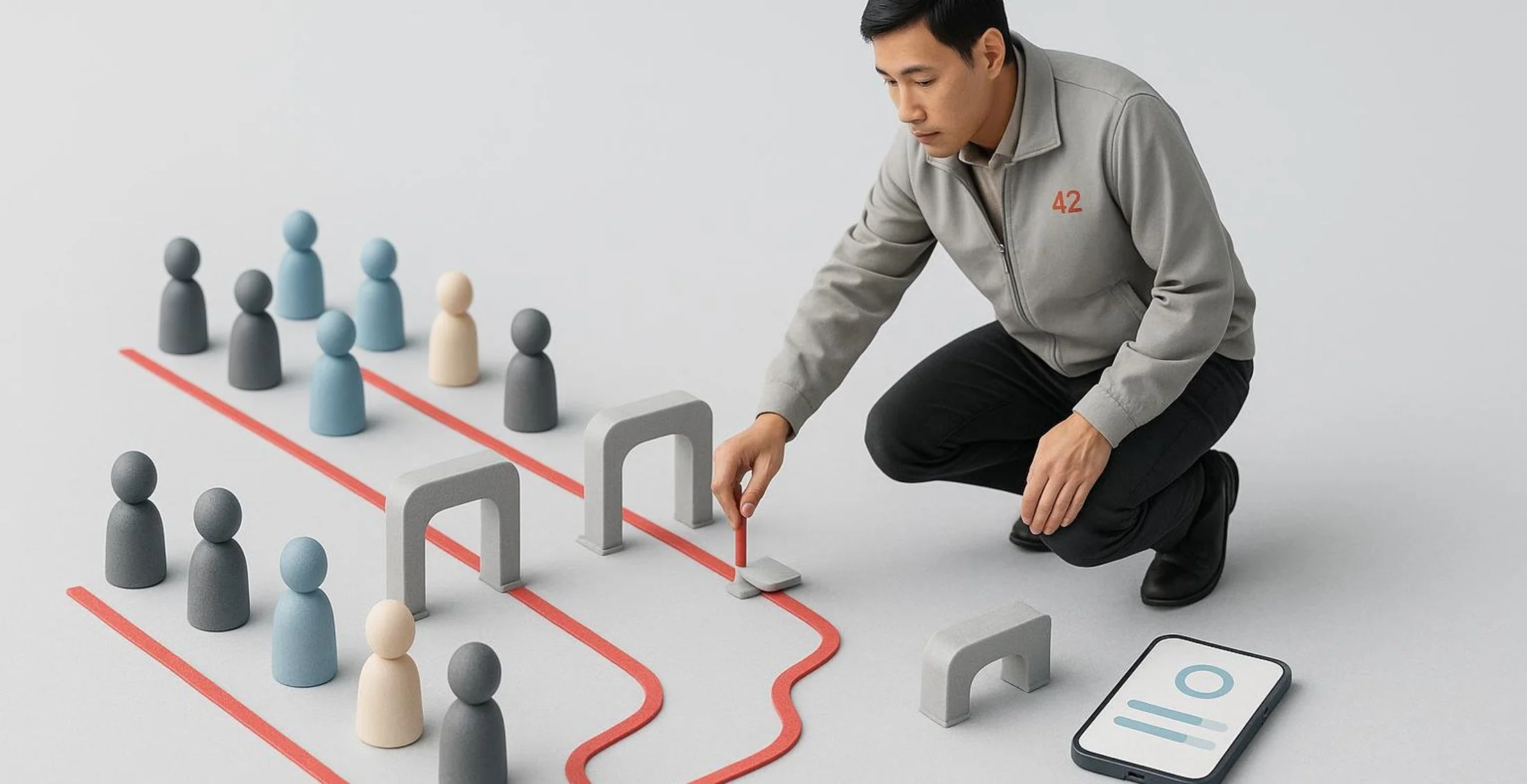
You’re planning team building for 100+ employees and the usual small-group playbook won’t scale. The tension you face is logistical — how to keep everyone active, avoid bottlenecks and still deliver meaningful team outcomes. This guide focuses on the operational choices that actually matter on the day.
For large groups pick team sizes that map to your objective. If the goal is cross-department collaboration, use 6–8 people so different roles can contribute without the group fragmenting. If speed and competition matter more, 3–4 keeps decision cycles tight. Larger teams (10–12) reduce queueing at checkpoints but dilute individual engagement. Trade-off: smaller teams increase involvement but raise checkpoint demand; larger teams simplify logistics but risk passive participants.
Design multiple identical checkpoints running in parallel rather than a single linear route. For 100+ people, operate each activity station with at least two simultaneous lanes where feasible. Combine that with staggered starts: release waves of 6–10 teams every 7–10 minutes to smooth flows. Trade-off: more lanes and waves require extra facilitators and space; fewer lanes save staff but create queues and downtime.
Use a simple mixed scoring system: base points for task completion plus small time bonuses for speed. Keep scoring transparent and easy to verify — QR check-ins or short photo missions work well. Avoid over-complex scoring models; they slow results and frustrate participants. Trade-off: pure time-based scoring rewards speed over collaboration, while task-based scoring emphasises completion and teamwork.
Digital check-ins remove manual scoring errors but choose low-friction methods: QR codes, short web forms and automated photo uploads. The tracking system must show live progress in aggregate (team count at each zone) rather than exposing precise GPS locations for privacy and safety. Trade-off: richer live leaderboards increase excitement but demand robust connectivity and more technical support.
Plan one trained facilitator per 10–15 teams plus roving ops staff for safety and troubleshooting. Facilitators do more than explain rules: they manage queues, reset checkpoints and flag issues to a central ops desk. Use clear signage, sheltered queuing areas and simple one-way flows to prevent cross-traffic. Trade-off: fewer facilitators reduce cost but increase volunteer stress and operational risk.
Show live but aggregated progress on large screens or a shared web leaderboard. Use scheduled mid-event announcements to share standings and energise slower groups. Keep participant messages short, actionable and time-stamped. Trade-off: constant updates are motivating for some teams but can demoralise those far behind; balance frequency and tone.
We typically plan one trained facilitator per 10–15 teams, plus roving ops staff to handle resets and safety. Exact numbers depend on checkpoint complexity and venue layout, so budget additional support for multi-lane stations.
Digital tracking can remove most manual scoring but needs reliable connectivity, simple check-in flows and an ops desk for exceptions. Keep a small team ready to verify submissions and resolve disputes quickly.
Stagger start times and design checkpoints with multiple lanes and buffer activities that absorb timing variance. Use facilitators to hold or release teams briefly if a downstream station shows congestion.
We can design the team sizes, checkpoint layout and digital tracking to match your venue and objectives.
BOOK A DEMO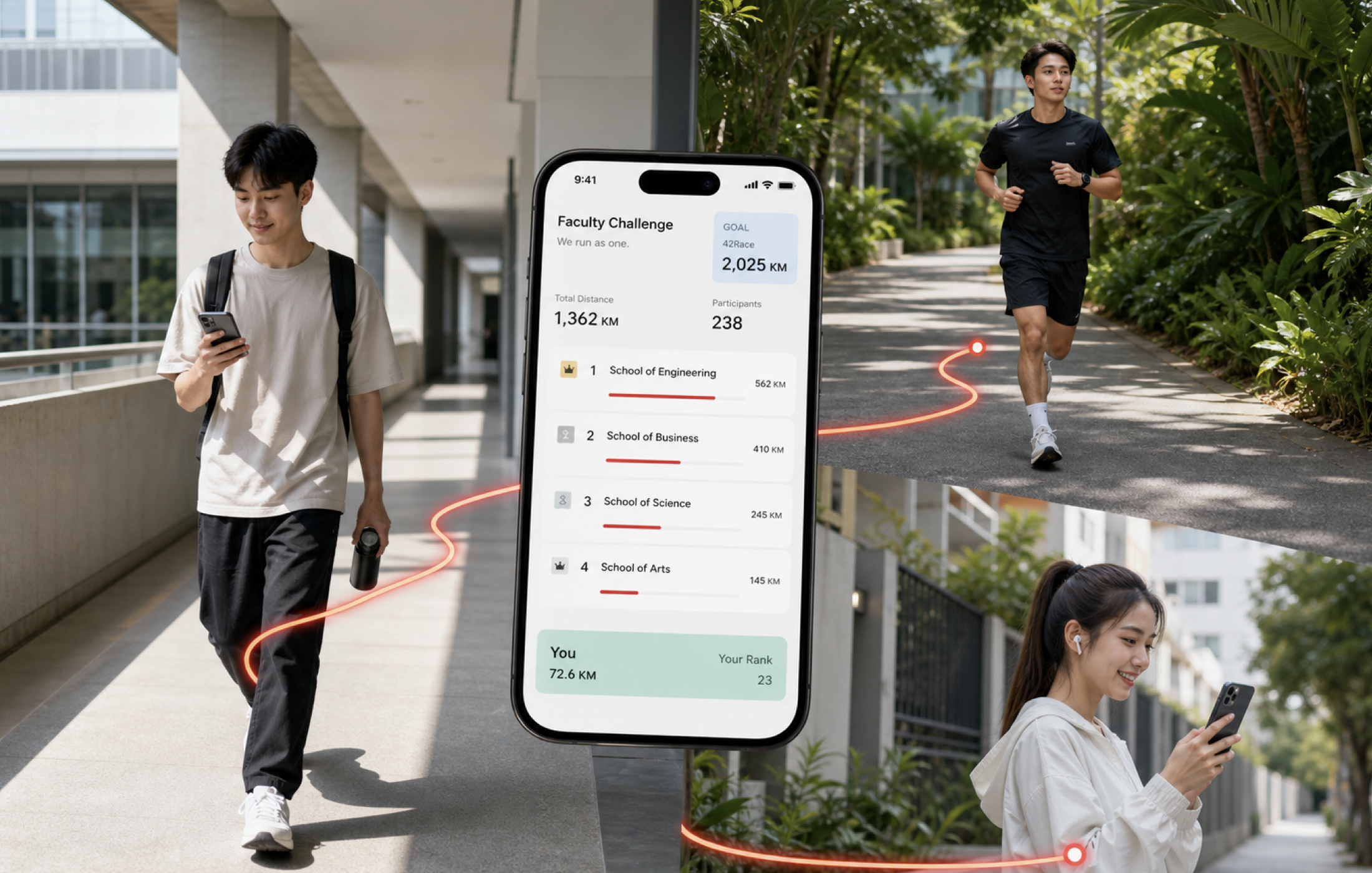
Virtual race offers a flexible, stress-free alternative to traditional running events by allowing participants to complete races at their own pace, on their own schedule.
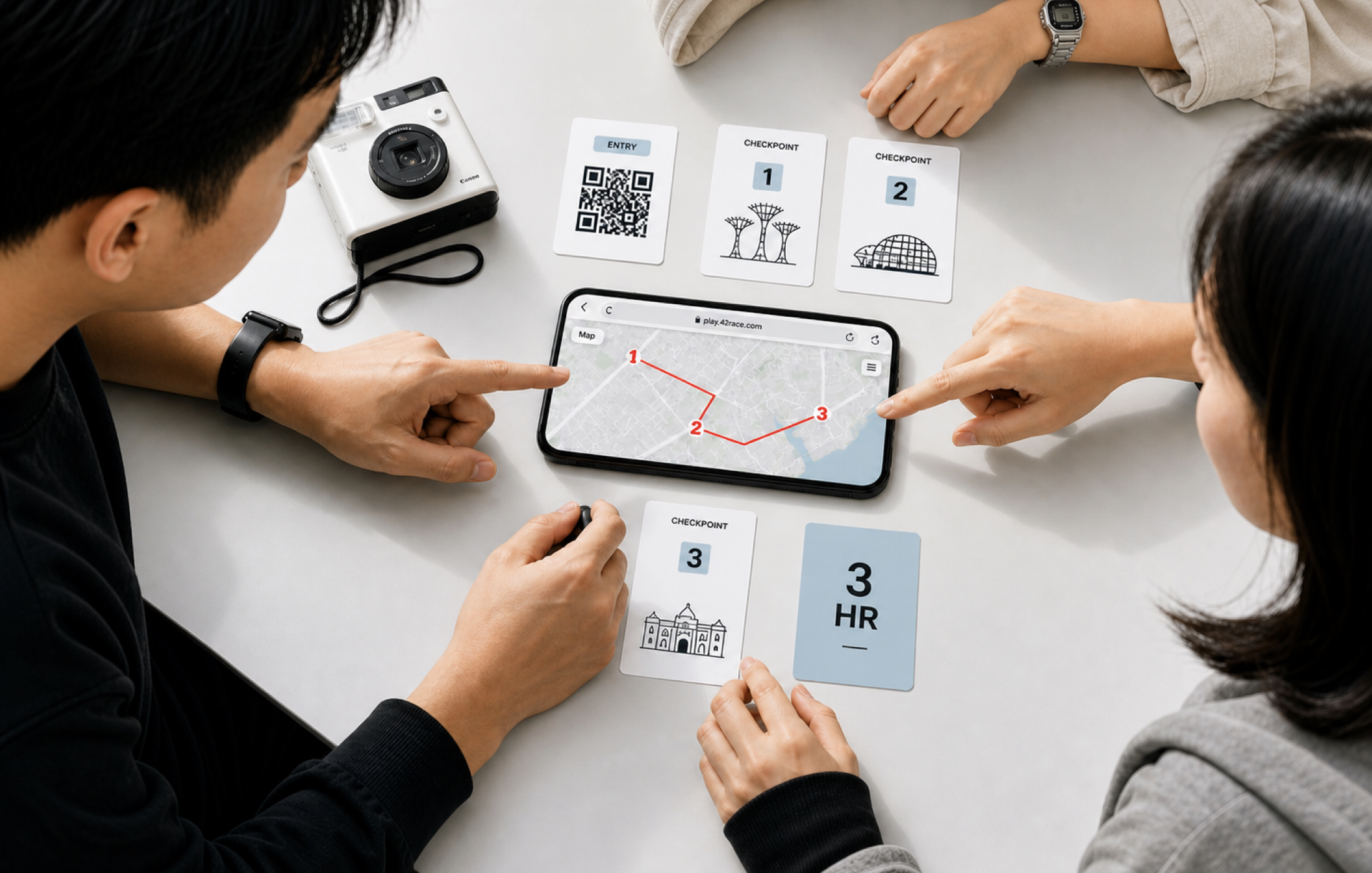
Practical, operational guide to designing an Amazing Race-style event for corporate teams: goals, format choices, logistics and inclusion.